
CNG Cylinder Damage Assessment Considerations
Information and guidance on conducting ana damage assessment of a cylinder CNG cylinders involved in an emergency.
Overview
CNG cylinders that have may have been subjected stress from a fire, impact, exposure, or disrepair should be assessed for potential damage. Based on the damage assessment, responder may elect to defuel/vent the product from the cylinder(s) to prevent a violent cylinder failure.
Damaged CNG cylinders can fail suddenly and catastrophically resulting a pressure wave and/or fire ball that can injure or kill nearby personnel. The damage cylinder can rocket long distances and penetrate structural walls or roofs.
Safety Considerations
Based on the circumstances responders should consider the following as appropriate:
- Establish an initial isolation zone until a damage assessment is completed
- If cylinders have suffered a thermal exposure, allow them to cool before performing the inspecting
- If cylinders are actively leaking, consider allowing them to leak out
- Personnel conducting the inspection should don PPE
- Minimize personnel in the hazard when performing an inspection
- Identify escape paths away from the vehicle.
- Personnel should avoid operating in the area where the PRD discharges. Vehicles rolled-over will change the PRD discharge direction.
- Consider using a robot or UAV (drone) to perform an initial inspection
- Consider using a camera to document the assessment/damage to avoid additional entries for second opinions
- Seek guidance from CNG cylinder subject subject matter experts
Assessment Considerations
Review Cylinder Label (if visible)
- Determine CNG cylinder type
- Note the service pressure (normally 3,000 or 3,600 psi)
- Check “expiration” or “do not use after” date
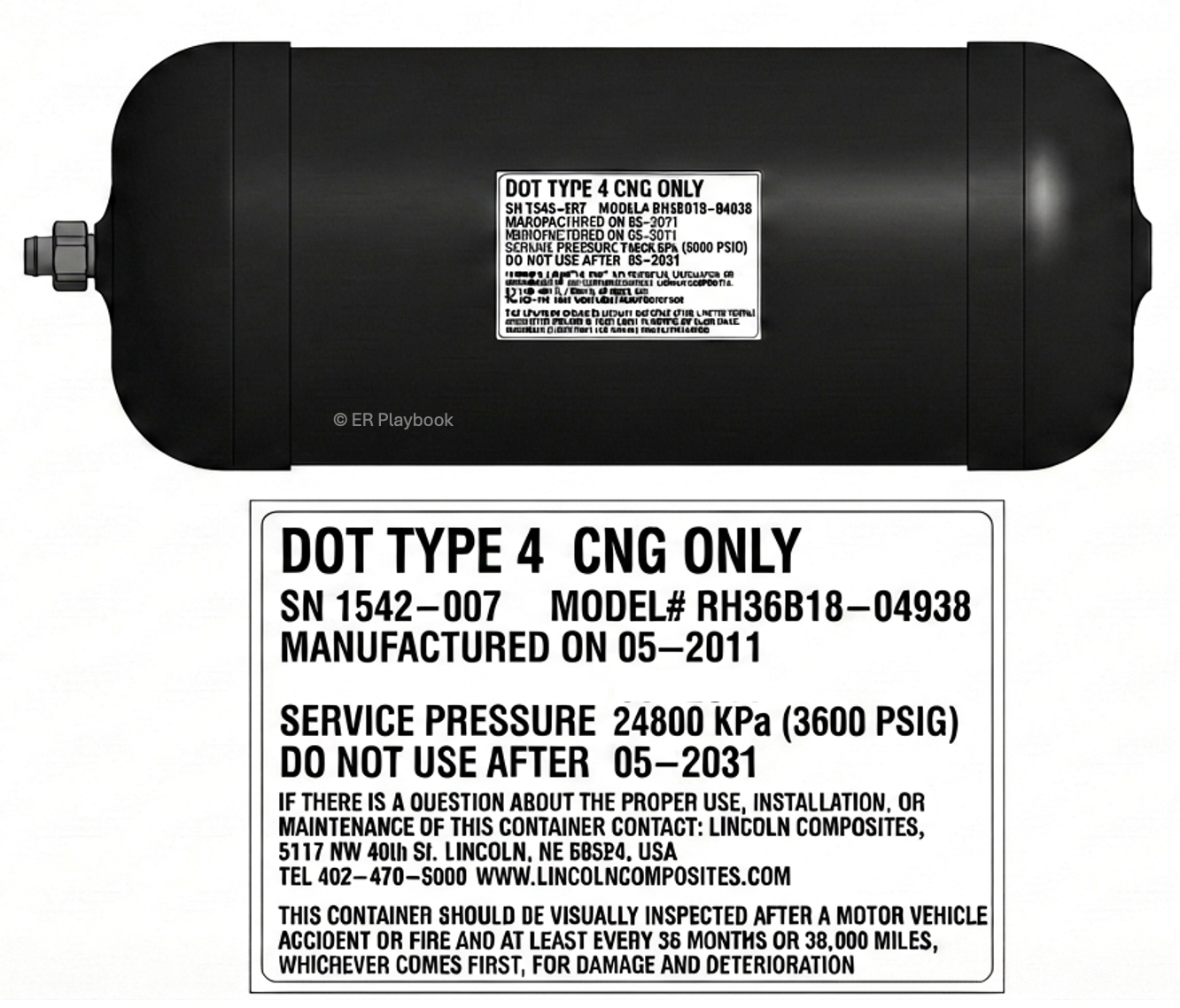
PHOTO: During a CNG cylinder assessment, attempt to observe and photograph the cylinder label if possible. [Photo copyright ER Playbook]
Assess for Thermal Damage
- Determine if cylinder was exposed to fire or involved is an explosion
- Observe for for signs of flame impingement including discoloration, deformity, or melted labels.
Assess for Physical Damage
- Look for cuts, gouges, abrasion, cracking, or bulging
- Assess for delamination such as “fibers” sticking up from the cylinder
Assess for Degradation or Corrosion
- May be caused by chemical exposure including corrosives
- Prolonged UV exposure, such as abanoned cylinders, may cause degradation
- Look for discoloration or ”rough” feeling patches where outer coating has been degraded
Consider Over-Pressurization or Inner Leaks
- Attempt to determine if the cylinder may have been over-pressurized such as 1.25 times its service pressure
- Bubbles on the surface of Type 4 cylinders may be indications of leaking of the inner plastic liner
Check for Leaks
- Observe for leaks in the cylinder body, behind the valve near the neck threads, or from the PRD hardware.
- Use Methane leak detector or CGI/LEL
- Thermal imager may show colder cylinder(s) for significant leaks
- Soap and water solution may indicate leak location including cylinder valve/cylinder neck interface
Check Cylinder Mounting/Brackets
- If cylinder is mounted on vehicle, ensure it is secure
- Unsecured cylinders can fall off in-transit or while being towed resulting in a leak, fire, explosion, or cylinder rocketing
- Damaged mounts may not properly contain a cylinder that begins leaking or venting from the PRD
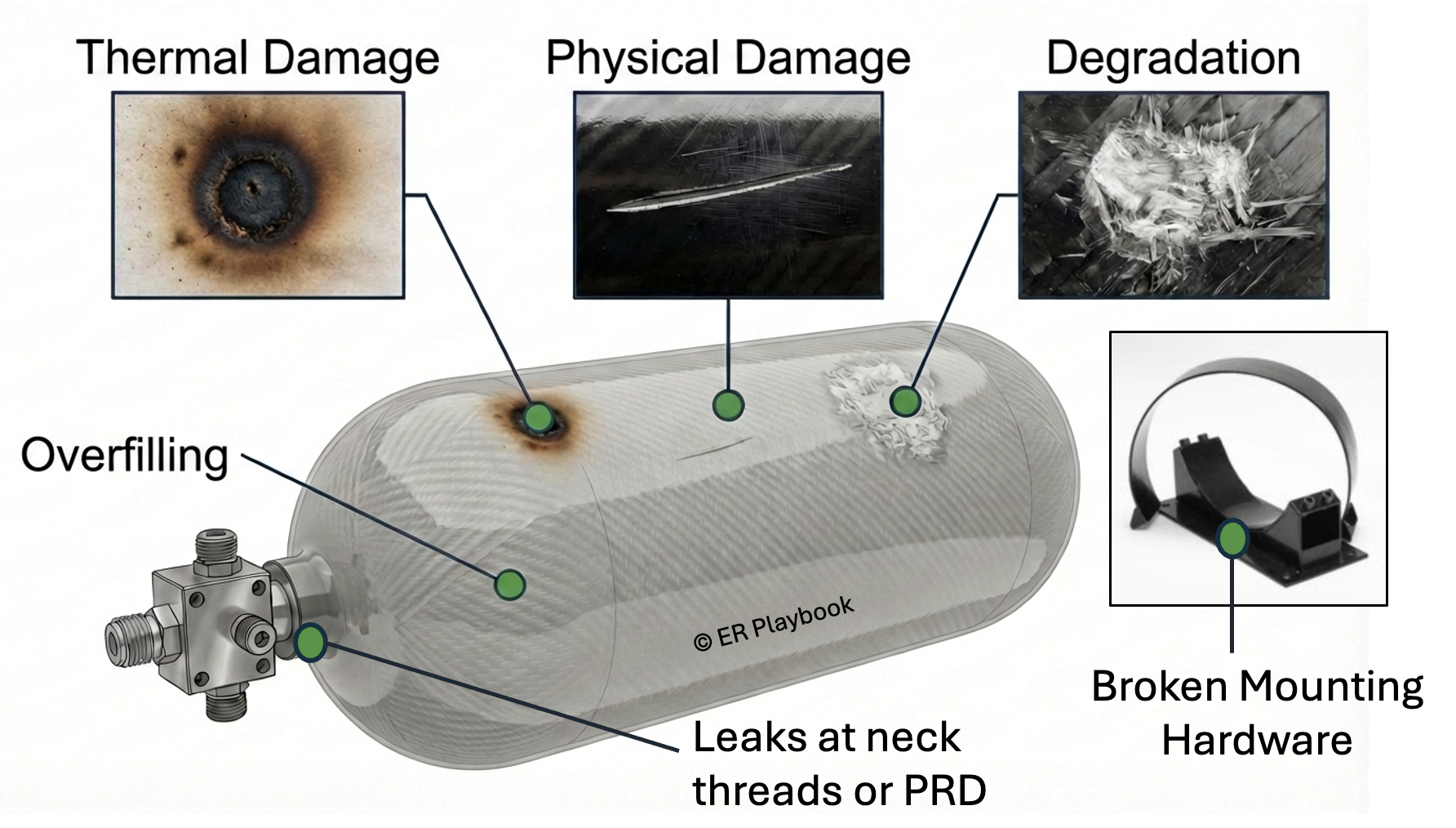
PHOTO: Illustration summarizing CNG damage assessment considerations including overfilling, thermal damage, physical damage, degradation, broken mounting hardware, or cylinder leaks. [Copyright ER Playbook]
A visual damage assessment conducted in the field by emergency responders may not be able to identify all damage to the cylinder(s). The intent is to identify critical damage that warrants emergency actions such as defueling the cylinder on-site immediately.
A trained CNG cylinder inspector should conduct a thorough follow-up inspection in accordance with natural gas vehicle standards prior to refueling or returning the cylinder to service.