
Homemade Pepper Sprays
Information on the illicit production of homemade irritants and response considerations including detection and decontamination.
Overview
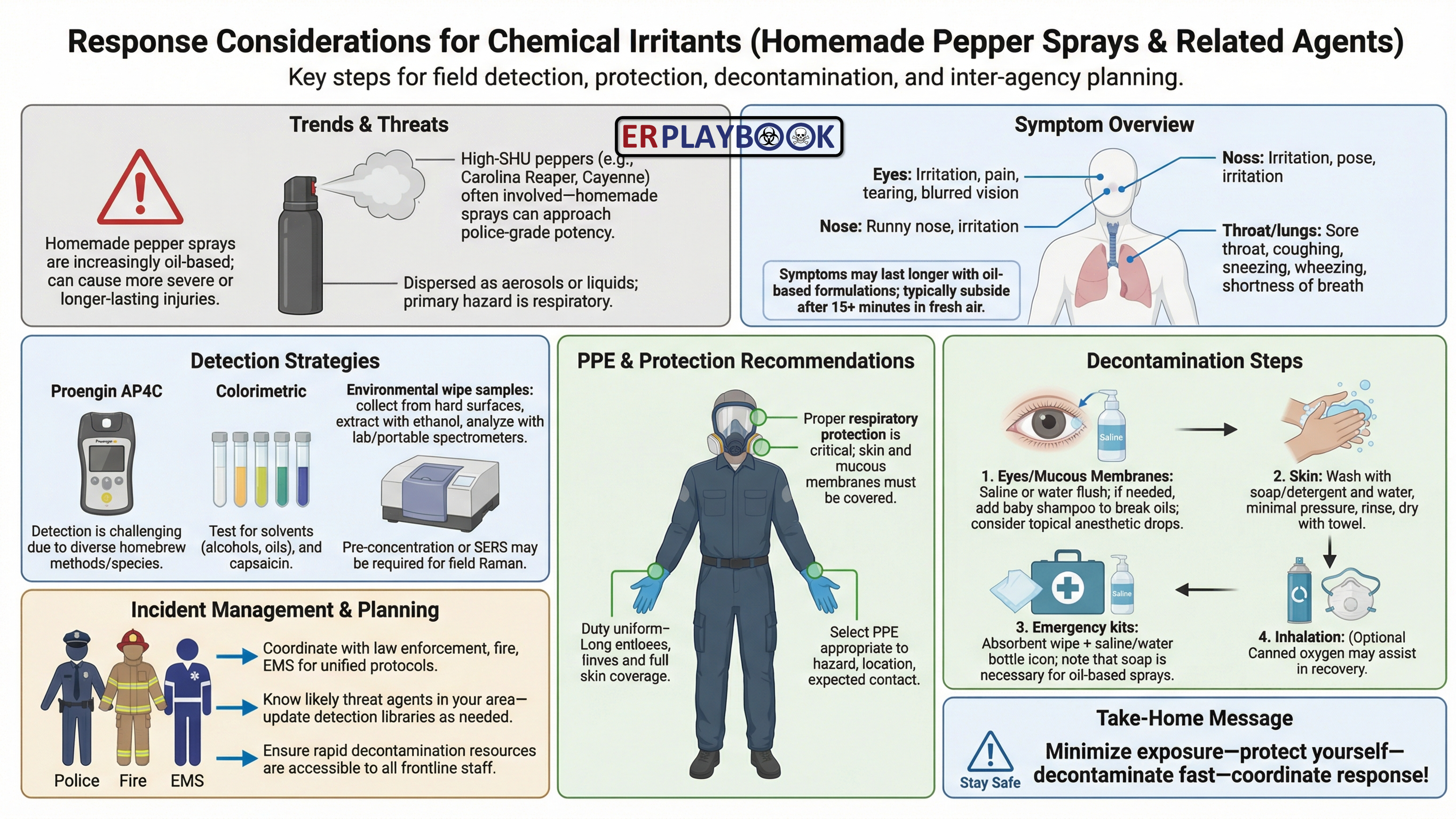
Over recent years homemade pepper sprays have become more common. Unfortunately, online guidance has been modified during the past year to make the pepper sprays oil-based instead of water-based. This requires a more complex decontamination process and may result in more severe and/or long-lasting injuries to operational personnel.
Toxicology
Homemade pepper sprays are dispersed as aerosols or as liquids. The primary threat to the public and emergency responders is respiratory, due to the inhalation of airborne droplets suspended in air. Symptoms of inhalation exposure include coughing, sneezing, wheezing, and shortness of breath. These symptoms begin within seconds and may gradually dissipate after approximately 15 minutes in fresh air. The use of oils in the spray matrix may increase symptom duration as the oils extend contact duration, and slow evaporation of the active agents.
Illicit Production
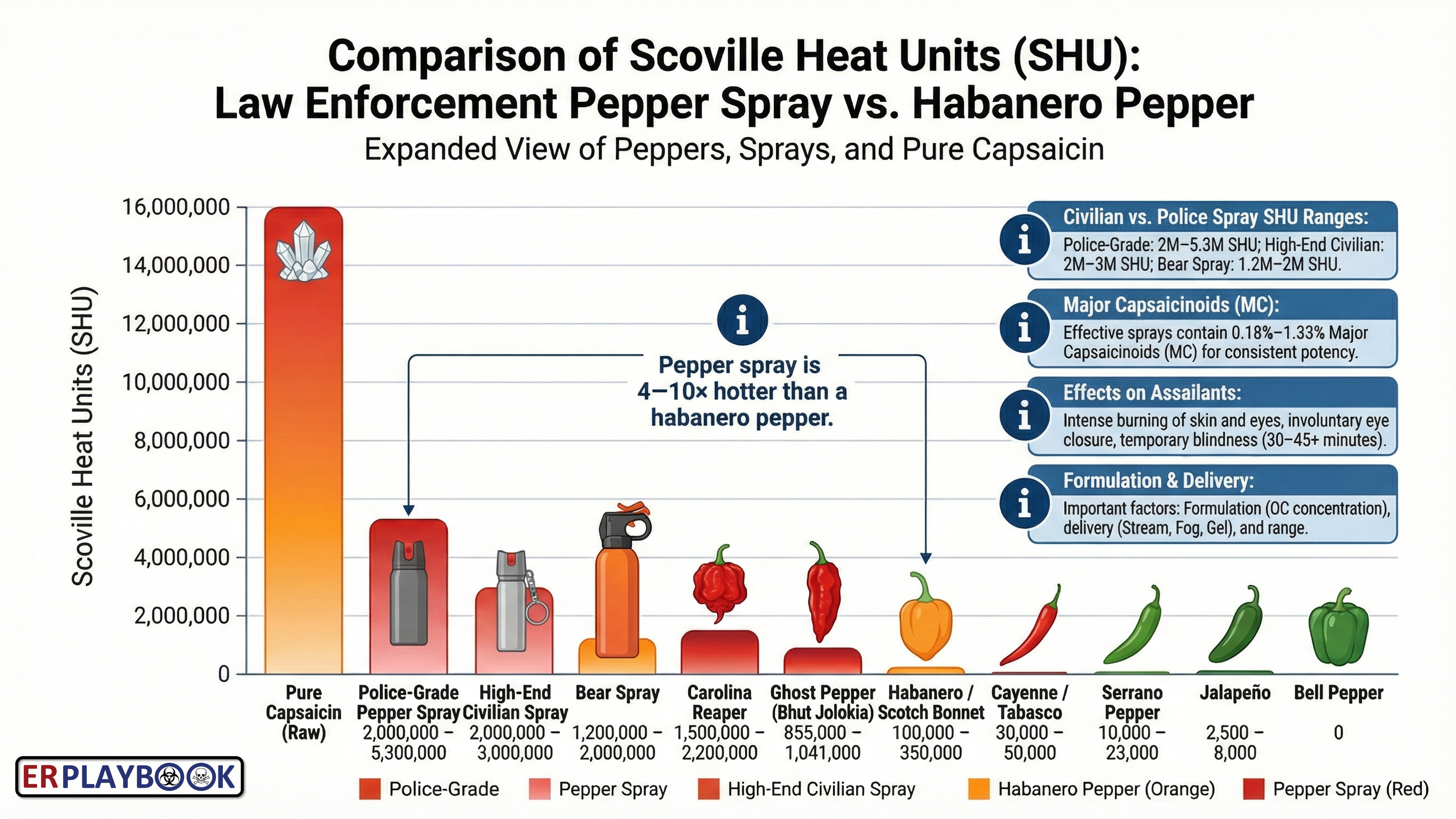
Current methods for producing homemade pepper sprays focus on extracting capsaicin (the active ingredient) from the pepper using isopropyl alcohol and a common oil such as vegetable oil, olive oil or baby oil. The resultant material is allowed to rest overnight before being filtered and put into a spray bottle or a modified aerosol can. Online sources use the Scoville heat scale (in Scoville Heat Units, or SHU) to define which peppers to use to create homemade pepper sprays with the highest damage factor. Traditional green peppers are assigned 0 SHU on the scale, jalapeno peppers range from 2500 to 8000 SHU, standard police issue pepper spray exceeds 2,000,000 SHU, and pure capsaicin rates around 15,000,000 SHU. Many online recipes recommend the use of Carolina Reaper peppers which have an SHU rating similar to police issued sprays. Additionally, recipes detailing the extraction processes which allow for capsaicin purification and use of other agents like cayenne pepper, are becoming more common.
There are a variety of homemade dissemination devices that have been recommended for use with pepper sprays. These range from aerosol spray bottles to modified paint cans. The modified spray paint cans (spray paint, shaving cream, etc.) start by spraying out all of the contents including the propellant. The next step is to drill a hole in the bottom of the can and rinse the insides well to remove original material. The homemade irritants are then added to the spray can and a bicycle tire valve is epoxied over the drill hole. Once dried, a tire pump is used to pressurize the contents. This device (images below) can spray a considerable distance.
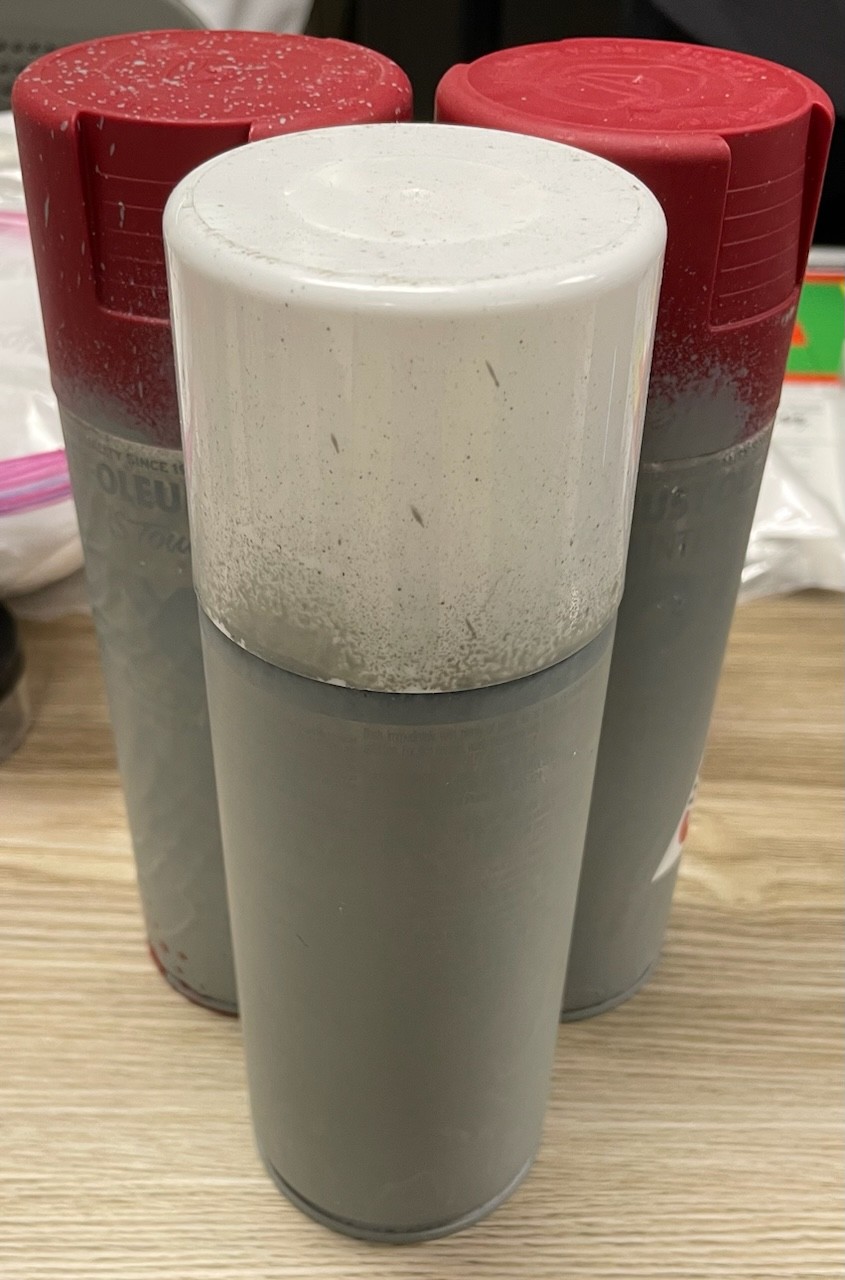
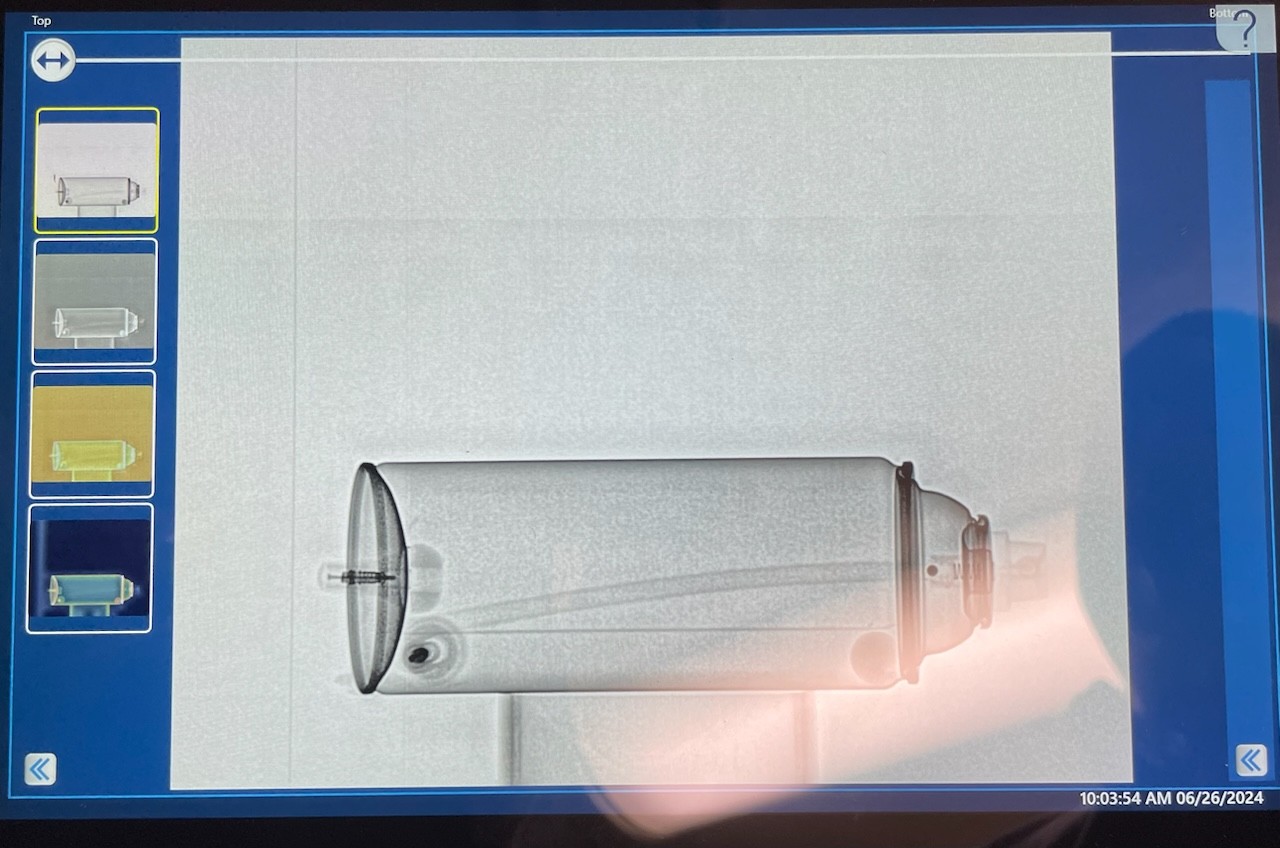
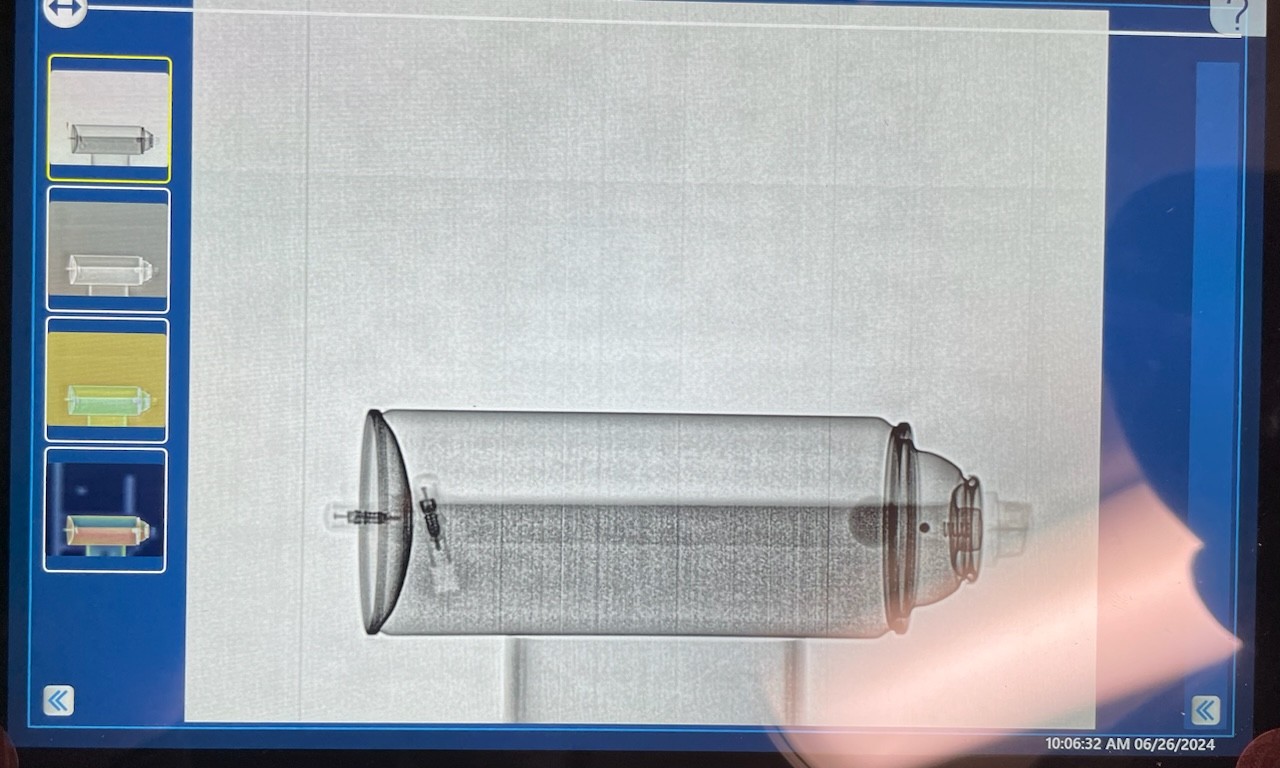
IMAGES (C) ER Playbook: Left (paint spray cans - empty), Center (modified paint spray can - empty), Right (modified paint spray can - threat inside)
Detection
The broad range of materials used in homemade pepper sprays makes the detection process complex.
- If the agent and container are present, then consider using the Proengin AP4C or colorimetric tubes such as chloroformate.
- The solvents and oils used can be identified via traditional spectroscopy techniques such as Raman and FTIR.
- The active ingredient may also be identified by Raman or FTIR spectroscopy, but it may not be in the spectral libraries.
- Furthermore, in some situations the active ingredient might need to be extracted from the solvent and then analysed via Raman or FTIR.
- Based on your local threat analysis, consider adding spectra of the pure active ingredients to your libraries. If the materials are dispersed, gather wipe-samples from hard surfaces where they are likely to be deposited and the highest concentrations should be obtained.
- Many factors affect the deposition concentration including distance from the release point. The wipe-sample should be rinsed with a solvent such as ethanol (or another high vapor pressure solvent) and the resultant sample resent to the analytical device (such as FTIR, GC-MS, HPMS, etc.) for further analysis.
- Because deposition concentrations are generally low, resulting in low sample concentrations, sample presentation is a significant challenge for field deployable Raman instruments unless a pre-concentration step is available. Other techniques should, therefore, be considered first unless surface enhanced Raman spectroscopy (SERS) becomes available.
Decontamination
If contamination of eyes and mucous membranes is suspected, they should be flushed immediately with copious amounts of saline solution or water. But if neither is relieving the pain, consider adding small amounts of baby shampoo to the wash water to break down the oils. The use of topical ophthalmologic anesthetic drops may be required to facilitate irrigation. Areas of skin affected by direct contact with any pepper sprays should be immediately washed with soap (detergent) and water. Apply soap to the skin using a sponge or wash cloth and minimal pressure; rinse the body with clean water using a low-pressure application; and wipe all body surfaces with a towel until they are dry.
For frontline domestic riot control personnel, the development of an emergency decontamination kit for personal use is warranted. Emergency Decontamination Kits should include:
- Highly absorbent wipe
- Saline solution or water
- Soap wipe (consider Johnson Baby Shampoo wipes)
- "Canned Oxygen" (there is anecdotal evidence that canned oxygen can be helpful in fast recovery from pepper spray inhalation).
Response Considerations
Remember, for a safe and effective response to events involving homemade pepper sprays:
- Minimize opportunities for unexpected exposure by wearing the appropriate respiratory and dermal protection.
- Ensure appropriate field expedient decontamination is available and minimize exposure by flushing mucous membranes or washing skin as soon as practical after exposure.
- Work with partner agencies to identify the agents likely to be used in your response area and develop multiagency response protocols. Prior coordination between law enforcement, fire and emergency medical agencies will be critical so you are all aware of the likely threat agents, their use, and to ensure the successful resolution of these events.
Video
| Information is for education and reference. User must verify all information is accurate. |
|
Copyright ER Playbook. Do not share or duplicate without written permission. |

No comments to display
No comments to display