
Fuel Theft Vehicles
Guidance on recognizing and responding to Illicit fuel theft and transport vehicles
Overview
Vehicles are Beingbeing Convertedconverted by Criminalscriminals to Facilitatefacilitate the Thefttheft and Transporttransport of Fuelfuel.
The vehicles are often vans or box vans, equipped with barrelsdrums or intermediate bulk containers (IBCS)IBCs), also know as totes, to hold the stolen fuel. This
See includesalso apages walk-throughfor of an illegal fuel transport vehicle performed by the Miami-Dade policeDrums and fireIntermediate department.Bulk Containers (IBC)
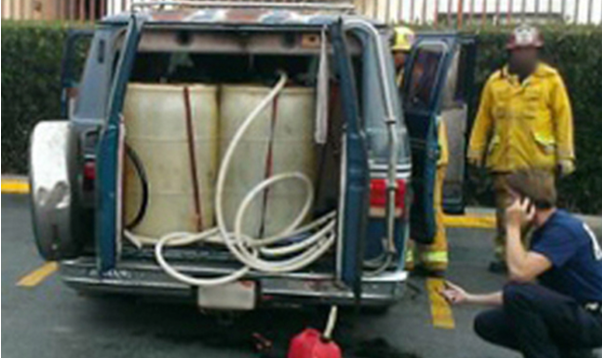
PHOTO: Incident photo of a fuel theft vehicle. [Source unknown]
Common Theft Methods
Stolen Credit Card
UseSuspects use a stolen credit card andto usepay at the service station pumps,fuel butpumps. They then pump thelarge quantities of fuel into aan improvised hidden compartment in the vehicle.
Tank Theft
Steal fuel directly out of the underground storage tanks at the gas station. This often includes a hidden compartment in the bottom of the vehicle and an onboard pump. The vehicle parks over the top of the underground tank covers, the cover is removed, and hose is lowered into the underground tank to pump stolen fuel into barrels or a tote onboard the suspect vehicle.
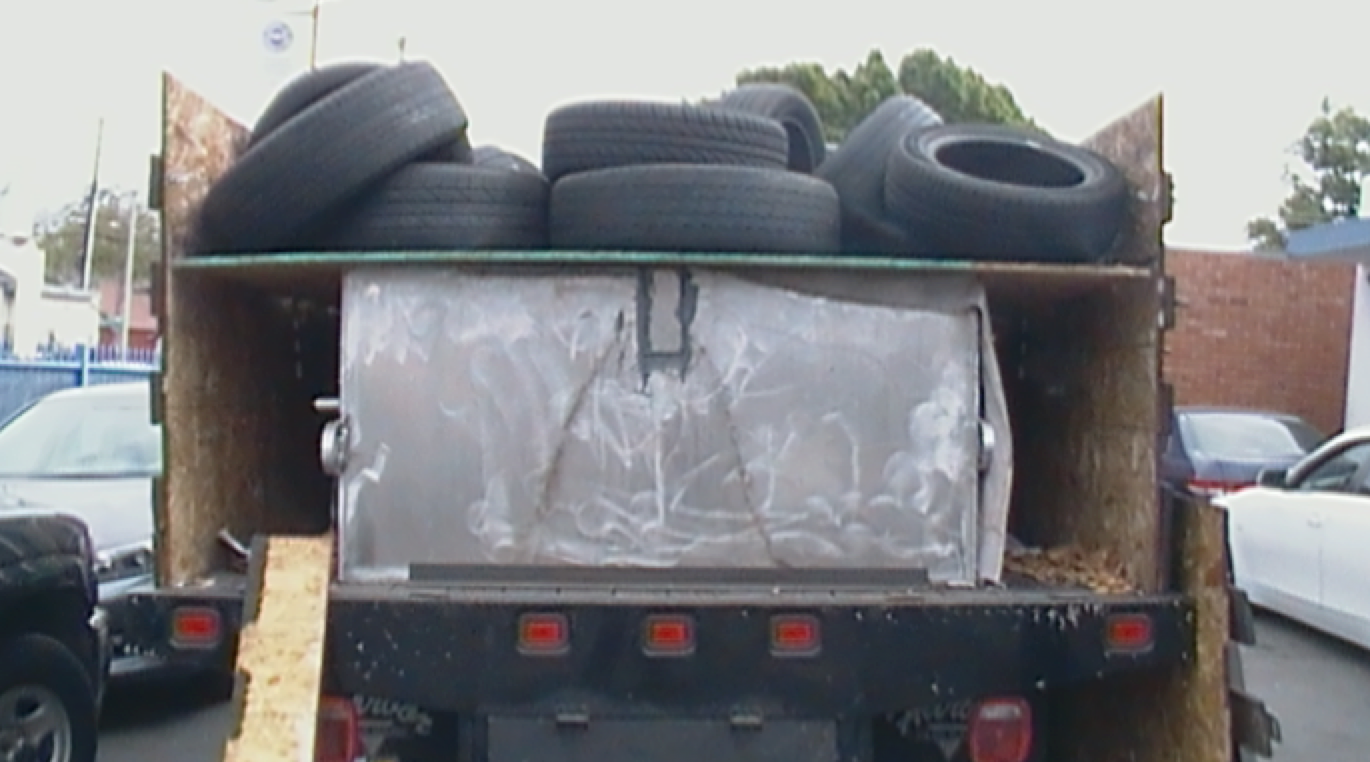
Photo: Commercial truck with a hidden tank
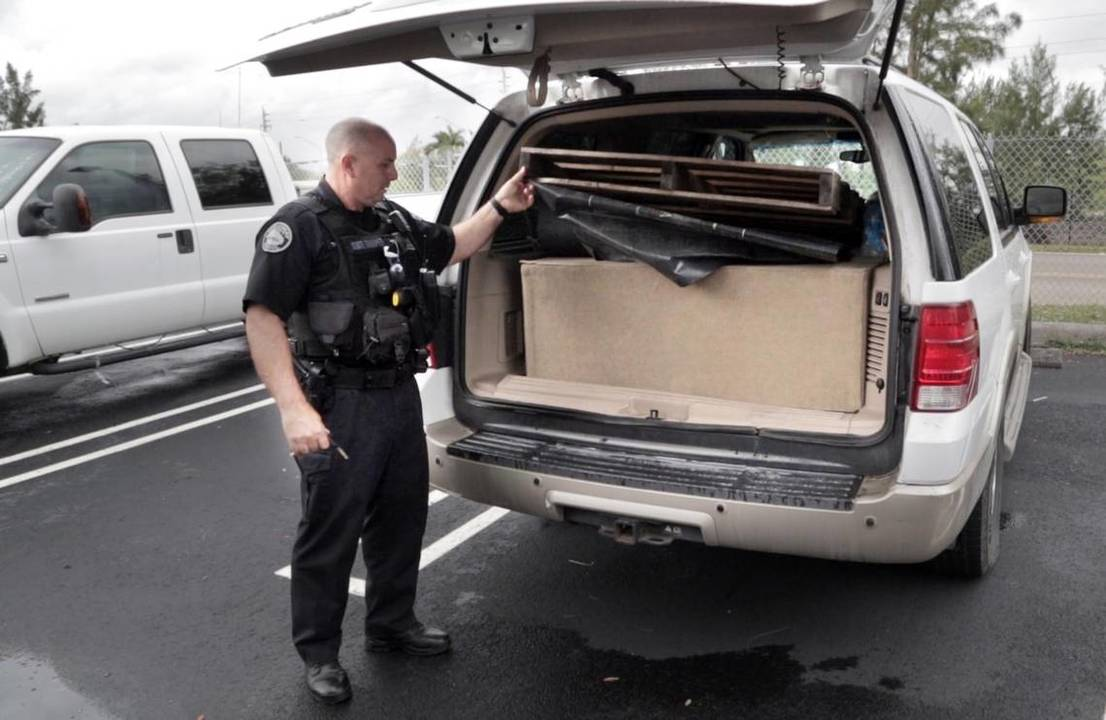
Photo: Sport utility vehicle with a hidden tank
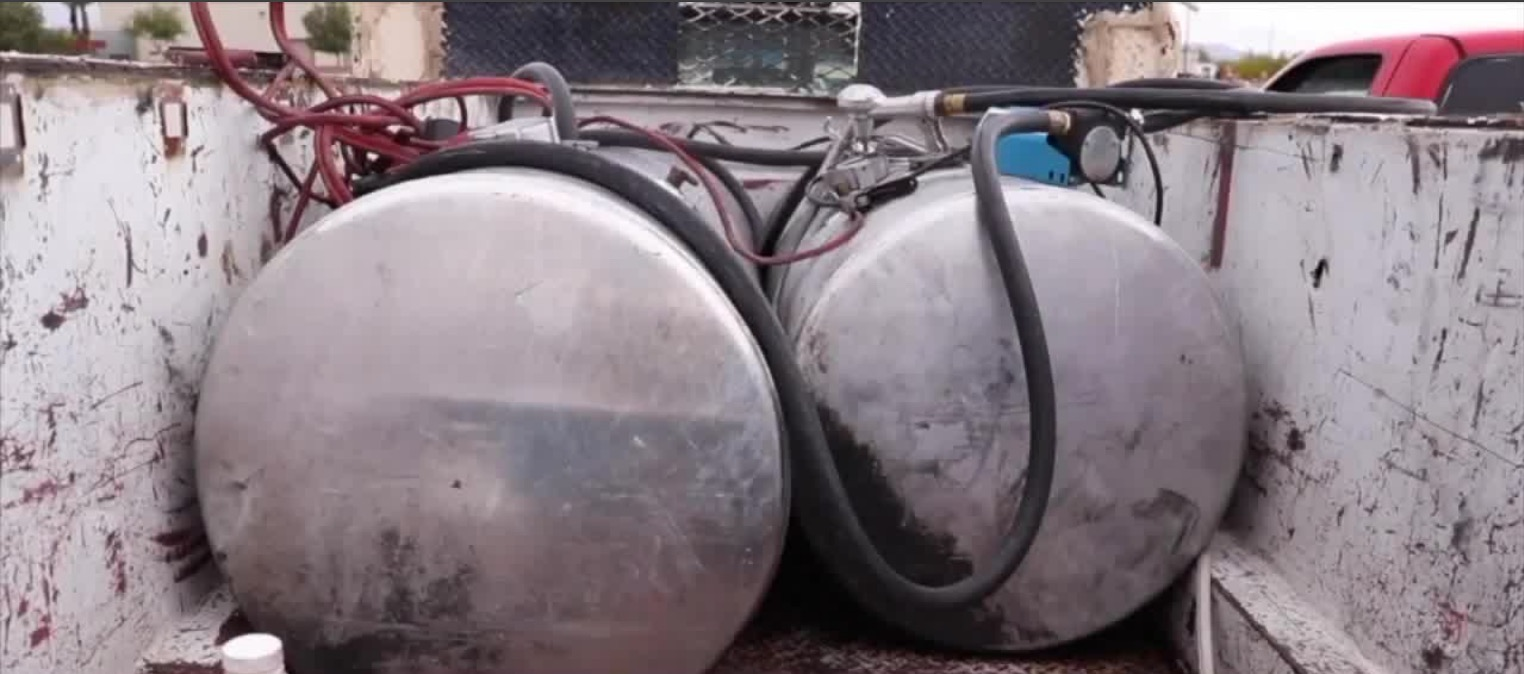
Recognition Clues
- Commonly trucks, vans, and SUVs
- Windows may be painted black or obscured
- Barrier or curtain obscuring the cargo area from the driver compartment of a van or SUV
- Odor of fuel emanating from the vehicle
- Vehicle suspension sitting low or tires bulging from the weight of the fuel
- Vehicle sways or leans when stopping or turning due weight and liquid fuel shifting
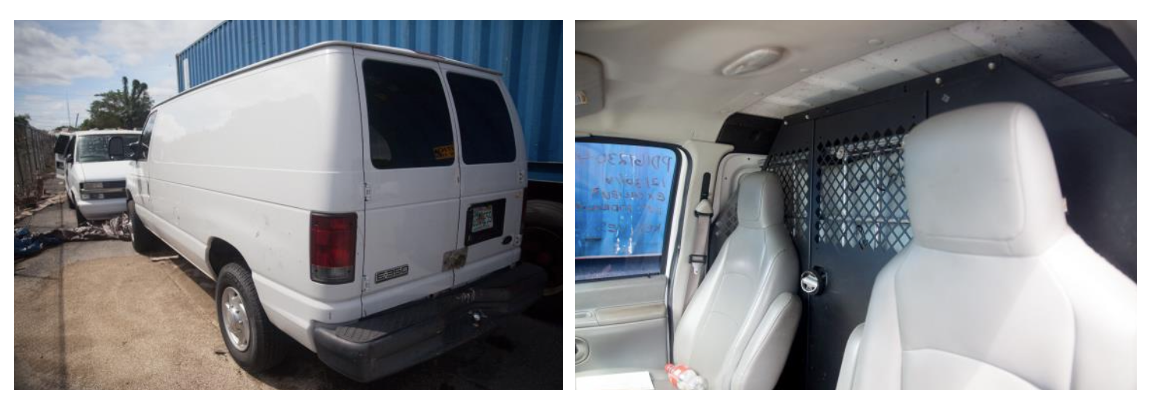
PHOTO: Van with windows painted black (left). Cargo area obscured by curtains behind metal screen (right) [Photos from Miami-Dade Fire/Rescue Near Miss Bulletin]
Some recognition clues for a fuel theft vehicle may be similar to an vehicle borne improvised explosive device (VBIED) or vehicle used to employ a Fire-as-a-Weapon (FaaW) attack. Based on the totality of the circumstances, consider the need for support from a bomb squad.
Response Considerations
Incident Managment
- Request law enforcement and establish unified command
- Request a HazMat team
- Consider the need for foam resources
- Develop an incident action plan (IAP)
Arrival and Control Zones
- Position apparatus uphill from the fuel theft vehicle in case a leak/breach occurs
- Ensure personnel and apparatus has an escape route for emergency retreat if necessary
- Isolate and deny entry to areas downgrade of the suspected vehicle
- Consider the need to evacuate vehicles and buildings downgrade of the suspect vehicle
A fuel breach, leak, or ignition may occur at any time. Ensure personnel are standing or operating in a safe location as a leak or ignition may occur at any time.
Fire Suppression
- Consider the need for a bulk foam resource (foam tender, trailer, or ARFF truck)
- Be prepared for a potential of a three dimensional rolling fuel fire, that can suddenly grow in size and intensity
- Understand that water will be ineffective in controlling all but a very small amount of burning gasoline or diesel fuel
- Consider gathering dry chemical
extinquishersfire extinguishers from apparatus on scene to combat running fuel fires.
Water can intensify and spread a flammable liquid fuel fire. If fire firefighters direct their hose line stream into the cargo area of a truck or passenger compartment of a minivan or SUV and the fire suddenly intensifies or grows, they should suspect the vehicle is carrying an additional fuel load and should stop applying water directly to the fire.
Water can intensify and spread a flammable liquid fuel fire.
Defensive Leak/Spill Control
- Eliminate ignition sources in the area
- Perform spill control measures if vehicle is leaking.
- Consider proactively damning/diking
drains,drainsentranceseven if vehicle is not leaking yet. - Notify environmental AHJ if a reportable release occurs
- Conduct risk/benefit analysis before committing personal to the interior or cargo area of a fuel theft vehicle with an active leak or flammable environment.
Product Transfer
- Consider transferring the fuel out of the fuel theft vehicle before the vehicle is towed
- Ensure the receiving container is compatible and approved
- Perform bonding and grounding
AttemptSome tofuel collecttheft asvehicles manymay dryuse chemicalplastic/poly extinguisherscontainers for gasoline. These containers may be non-conductive which may prevent proper bonding and grounding and increase the risk of fire from unitsstatic onelectricity. scene as possible to fight this potential three dimensional fireBe mindful of run offand where personnel are standing or operating (ignition could happen at any moment)into storm drains and notify Department of Environment/Natural Resources and Water and Sewer Department