
Illegal Indoor Marijuana Cultivation (IMC)
Guidance on the recognition, hazards, and response considerations for illicit indoor marijuana cultivations (IMC) (aka grow house).
Overview
Indoor marijuana cultivations includes legal and illegal operations. They range from small-scale residential setups to large commercial facilities. This guideline is primarily intended for illegal improvised grow operations commonly found single, multi-family residences, and out buildings.
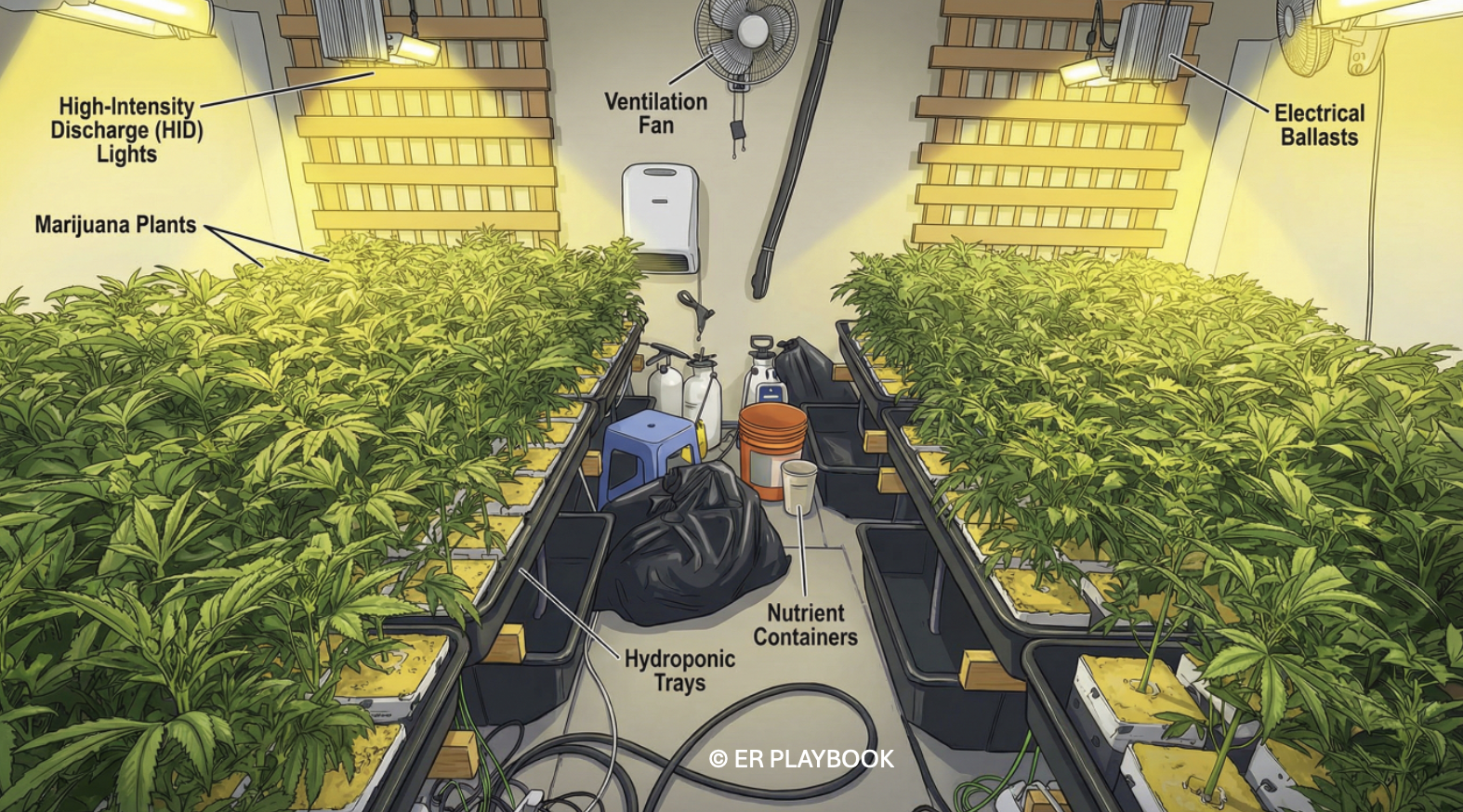
PHOTO: Illicit IMC including bars on the widows. [Photo Copyright ER Playbook]
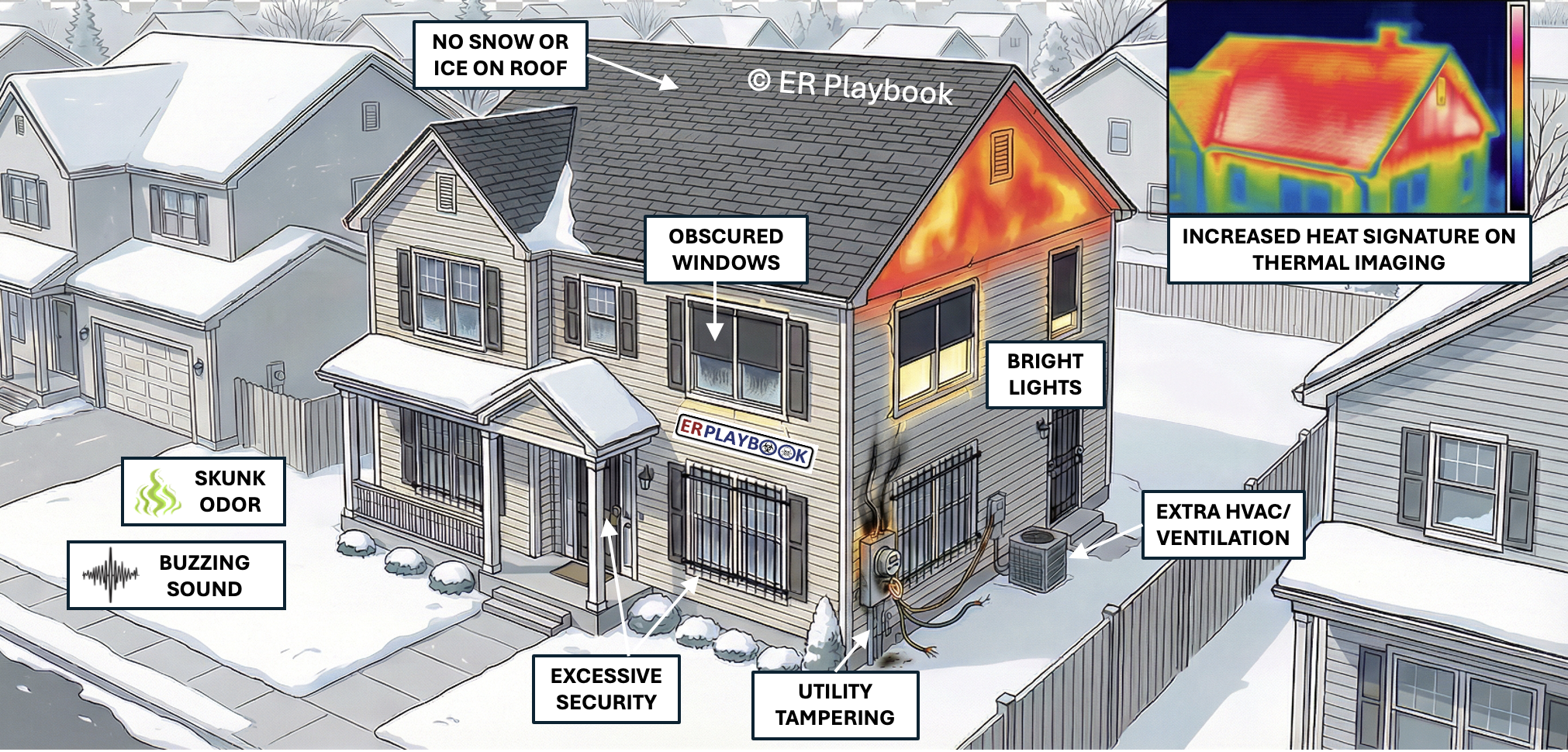
Exterior Indications of a Possible Illegal IMC
- Unusual buzzing sounds coming from inside the residence from light ballasts
- Presence or sounds of fans running
- Bright light emitting from cracks around windows and doors
- Condensation collecting on windows
- Blacked-out or heavily shaded windows
- Security inconsistent with the neighborhood including windows and doors that are fortified, or extra locks on doors or gates
- The absence of snow or frost on roofs or rooflines caused by the heat produced from grow lights
- Heat visible from the roof using a thermal imaging camera
- Skunk like odor
- Electric utility meter tampered with
Hazards
Illegal Indoor marijuana cultivation (IMC) operations contain multiple hazards, including chemical hazards, reduced oxygen environment, flammable gases, entanglement/trip hazards, structural modifications, improvised/overloaded electrical, bypassed electrical meters, mold, and criminal suspects. Illicit operations may contain booby-traps or un secured weapons.
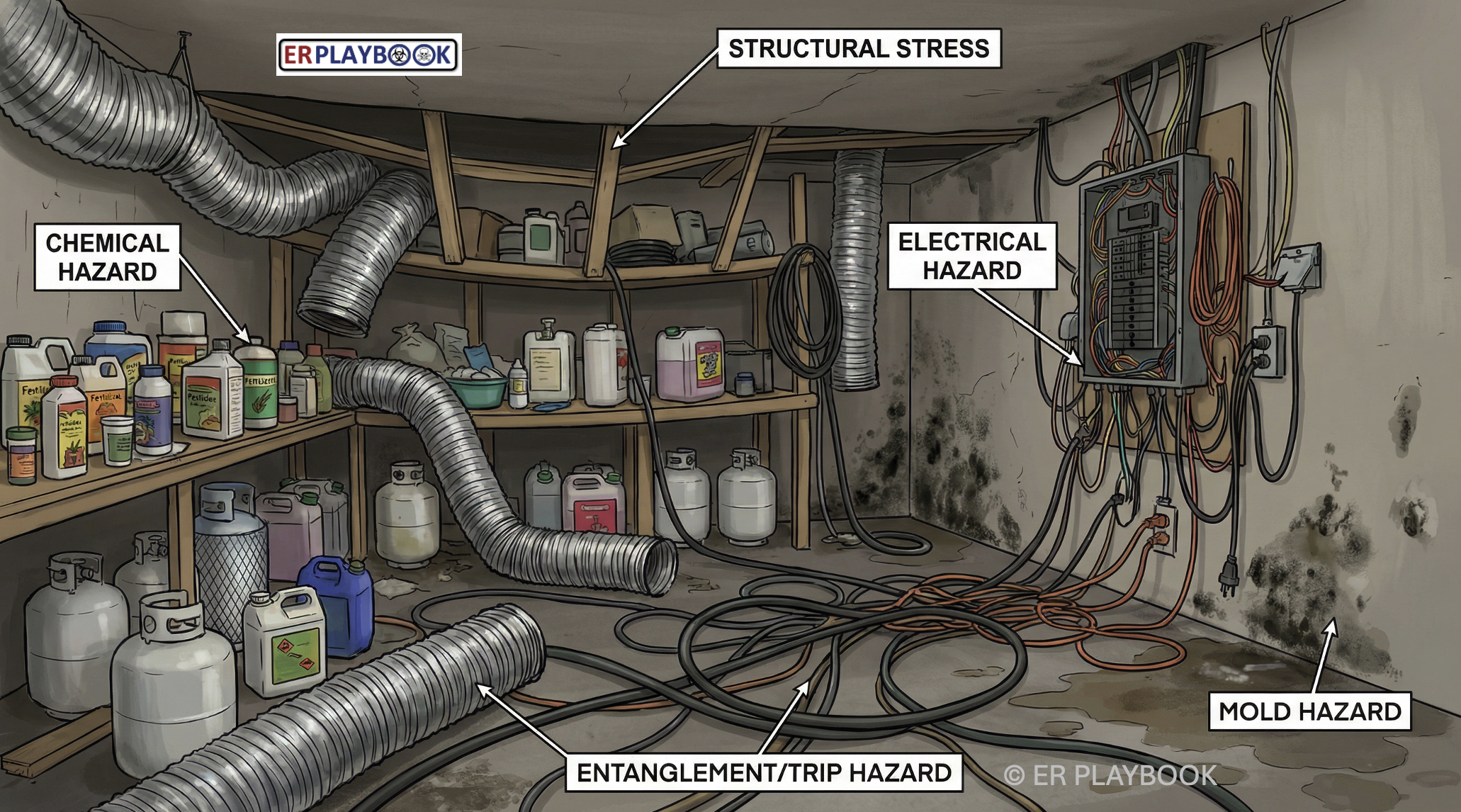
PHOTO: Illustration of common hazards. [Copyright ER Playbook]
Chemicals
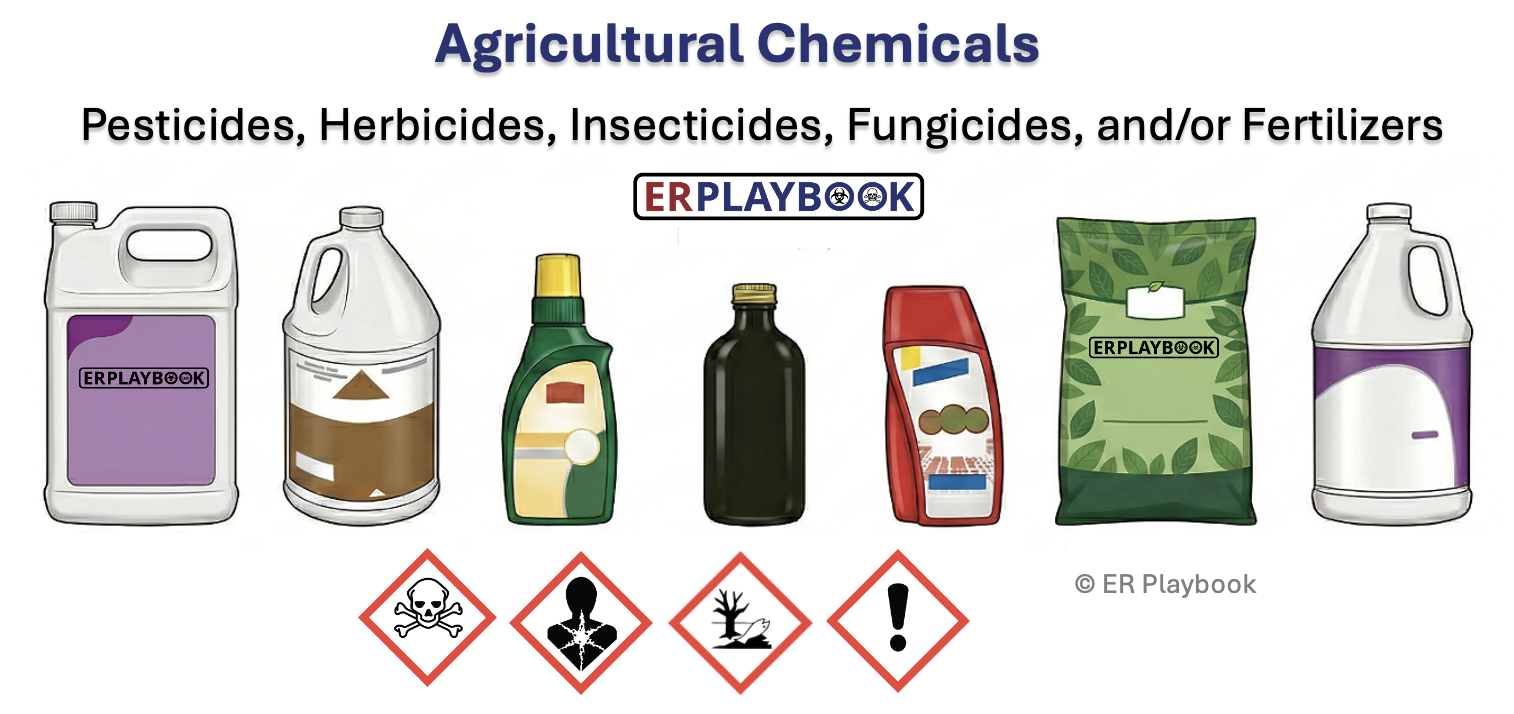
Chemicals are frequently present in indoor grows include:
- Fertilizers
- Herbicides
- Pesticides, including organophosphates
- Insecticides
- Fungicides
Gas Generators and Cylinders
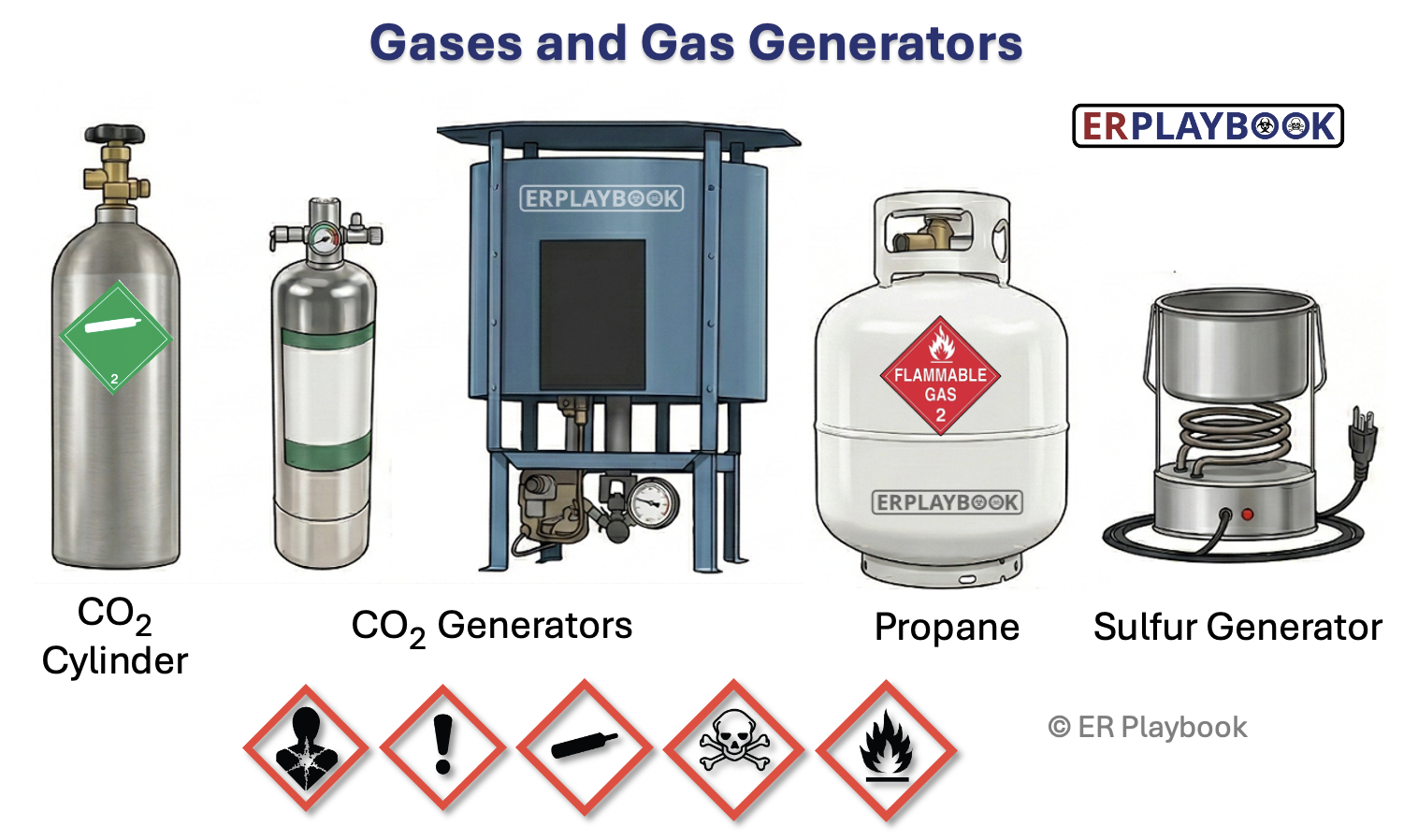
- Carbon Dioxide (CO2) compressed gas cylinders
- Carbon Dioxide (CO2) gas generators including propane powered
- Sulfur burners/vaporizers
Carbon Dioxide CO2 Gas Generator
Indoor marijuana cultivations often use increased carbon dioxide CO2 environments to enhance plant growth. The additional CO2 can provided from compressed gas CO2 cylinders, propane-powered, or natural gas powered CO2 generators. Increased CO2 within these tightly sealed rooms can displace oxygen, leading to asphyxiation.
Entanglement Hazards
- Ventilation ducting
- Exposed electrical wiring
- Extension cords
- Flexible plastic irrigation tubing
- Suspension ropes and cables
- Large-diameter flexible ducting
The ventilation ducting is often constructed of a lightweight aluminum foil laminate wrapped around small diameter helical wire. Under fire conditions, the exterior sheathing burns/melts away, leaving the helical wire exposed. This presents a significant entanglement hazard for firefighters.
Electrical Hazards
Illegal IMC's can present a shock and electrocution hazards to responder from multiple sources including:
- Large number (20+) of high-pressure sodium/metal halide or LED overhead lights and power supplies
- Improvised or exposed electrical wiring
- Open breaker panels
- Overloaded household circuits
- Overloaded extension cords or plug-strips
- By-passed or altered electrical meter/power feed into the structure to reduce costs or avoid detection due to high energy use.
Illegal marijuana cultivations can consume upwards of 10,000 to 12,000 kW hours of electricity per month, nearly 20 times average household use.
Illegal tampering or by-passing the electrical meter could resulting in standard electrical disconnect/power shut-down procedures used to control utilities during a structure fire or emergency failing to actually shut down the power feeding into the structure.
Mold
Mold in grow houses is a common issue driven by the high humidity (often 80%+) and moisture required for plant cultivation.
Illegal IMC Recognition
When conducting reconnaissance at an unknown illicit lab to determine the lab type, evaluate the Propaganda, Precursors, Processes, and Products present (4 P's Method) to assist in recognizing the type lab. Illegal indoor marrijuan cultivation operations may include the following:
See Also Clandestine Lab Recognition Process.
Propaganda and Modus Operandi
- 420 references
- Marijuana and THC magazines
- Growing manuals and guides

Precursors and Supplies
- Carbon Dioxide cylinders or generators
- Propane cylinders
- Sulfur generator or vaporizer
- Pesticides and herbicides
- Plastic sheeting, plant stocks, fertilizer bags, plastic piping
- Large amount of soil and pots acquired or discarded
- Lumber or building supplies
Process and Equipment
- Agricultural chemicals (see chemical list above)
- High intensity lighting
- Irrigation pumps and hoses
- Ventilation systems and fans
Products and Waste Produced
- Marijuana plants
- A distinctive “skunk” or “rotten cabbage-like” odor of marijuana inside or emitting from the structure
- Used potting buckets or soil
- Discarded ventilation equipment or electrical wires
- Waster water run-off
See Also Marijuana / Cannabis
Response Considerations
HazMat Response Considerations
Incident Managment
- Coordinate operations with law enforcement
- Maintain operational security (OPSEC)
- Ensure no suspects or aggressive animals are potentially in the lab
- If any signs of booby traps are encountered, withdrawal and request bomb squad/hazardous device team support
- IC should consider the need to notify or coordinate with supporting agencies including building department, health department, environmental AHJ, or cannabis regulatory AHJ.
- Establish and mark control zones
- Develop an incident action plan (IAP) and safety plan
PPE Selection
- Consider Level B ensemble for initial recon and air monitoring.
- If a flammable hazard is suspected or encountered, don structural fire fighter protective clothing (SFPC) or fire resistance clothing and SCBA until hazard is abated.
- Downgrade PPE when safe to do so.
- Consider insulated electrical gloves depending on the degree of hazard
Air Monitoring and Detection
- Radiation detection to rule out
- O2 to check for oxygen displacement
- LEL for flammable
- PID
- Monitor for SO2 (consider using using an H2S electrochemical with correction factor if needed)
- CO2 monitor (do not rely on oxygen depletion alone for CO2 monitoring)
- Pesticide test kit
- Particulate monitor
- Detection papers
Recon
- Identify hazards and conduct air monitoring
- Locate and turn off CO2 and SO2 generators
- Determine if any other illicit processes/productions are occurring
- Look for indications of illicit THC extraction process
- Identify chemicals and cylinders present
Render Safe
- Ventilate the structure as needed
- Consider flaring any compromised propane cylinders
- Eliminate ignition sources
- Reduce entanglement hazard if possible
- Segregate, safely stage, or overpack and chemicals of concerns
- Identify unknown chemicals
- Secure, tag the structure, and notify AHJ.
Decontamination
- Consider dry decon method
- If pesticide contamination is significant, consider hybrid decon method.
Structure Fire Response
Some indoor marijuana grow are discovered as a result of a structure fire response. When responding to a structure fire in a suspected illegal indoor marijuana grow operation the fire department personnel should consider the following:
Strategy Selection
If an illegal IMC is suspected during size up, the IC should consider the increased level of risk when selecting an offensive or defensive strategy. Some key factors may include, but are not limited to:
- Is this an occupied or unoccupied structure?
- Can electrical utilities be secured?
- Have entanglement hazards been encountered?
Emergency Alert
- Ensure all personnel are notified of a potential illegal grow operation.
- Consider declaring priority or emergency traffic to notify dispatch and all responding personnel of the hazard on the command and tactical channels.
PPE / Decon
- Ensure all crews entering the structure don and maintain SCBA including during overhaul
- Perform gross decon / preliminary exposure reduction for personnel that make entry
Resources
- Request and coordinate with law enforcement
- Request the electrical utility company respond to verify the building’s power has been isolated.
- Request a HazMat team. (see above).
| Information is for education and reference. User must verify all information is accurate. |
|
Copyright ER Playbook. Do not share or duplicate without written permission. |

No comments to display
No comments to display