
Refrigerant Gas Cylinders
Overview and Use
Refrigerant gas cylinders are used for transporting gases used cooling systems such as air conditioning systems and refrigerators to absorb and release heat.
Refrigerant gases can be flammable and/or toxic. Refrigerant gas cylinders marked with a red top or stripe contain flammable gases in accordance with industry standards, see Refrigerant Gas Cylinder Label And Color Codes below.
Design and Construction
Refrigerant gas cylinder design and construction include disposable (single-use, DOT-39), reusable, and recovery cylinders. They vary in size from 1lb to 1,000 lbs or more.
- Disposable Cylinders: Non-refillable, DOT-compliant (DOT-39), single-use containers for adding refrigerant to systems, designed to be recycled after use to prevent refrigerant release.
- Reusable Cylinders: Multiple use cylinders that meet DOT DOT-4BA, DOT-4BW specifications or ASME certifications for larger tanks.
- Recovery Cylinders: Cylinders used to capture/receive refrigerants when they are removed from a system during system servicing/repair. They featuring specific valve systems to allow refrigerants to be added to the cylinder in the field by a pump.
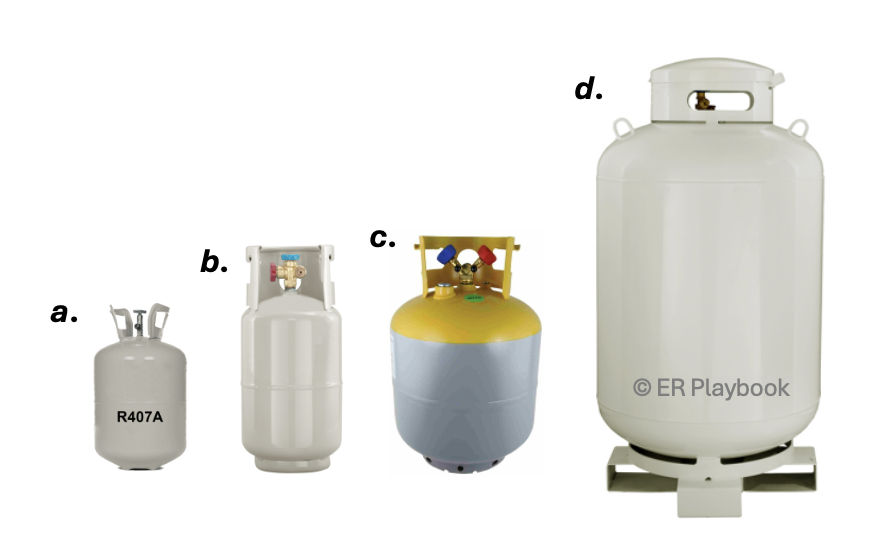
PHOTO: Refrigerant gas cylinders: a. disposable DOT spec 39, b. resusable DOT spec 4BA, c. recovery cylinder, d. Duel certified DOT cylinder and ASME tank.
Common Types of Refrigerant Gases
- Hydrofluorocarbons (HFCs): Widely used replacements for CFCs/HCFCs, like R-134a (cars, chillers) and R-410A (AC), but are being phased down due to high global warming potential (GWP).
- Hydrochlorofluorocarbons (HCFCs): Like R-22, these were transitional but are being phased out due to ozone impact.
- Chlorofluorocarbons (CFCs): Older types (e.g., R-12) phased out under the Montreal Protocol due to severe ozone depletion.
- Natural Refrigerants including:
-
- Ammonia (R-717): Used in large industrial cooling, highly efficient but toxic.
- Carbon Dioxide (R-744): Gaining popularity for its low GWP.
- Hydrocarbons: Like Propane (R-290) and Isobutane, used in smaller systems
-
Refrigerant Gas Cylinder Labels and Color Codes
Color coding of refrigerant gas cylinder should comply with Air-Conditioning, Heating, and Refrigeration Institute (AHRI) Guideline N . Previously, common refrigerant gasses were each assigned a specific cylinder color. AHRI discontinued specific cylinder colors for each refrigerant cylinder, except R134a. New refrigerant gas cylinder are normally painted a standard grey. The consumer box or cylinder label may continue to use previous color for marketing purposes.
Reading the cylinder label is the primary method for identification/recognition of refrigeration cylinders.
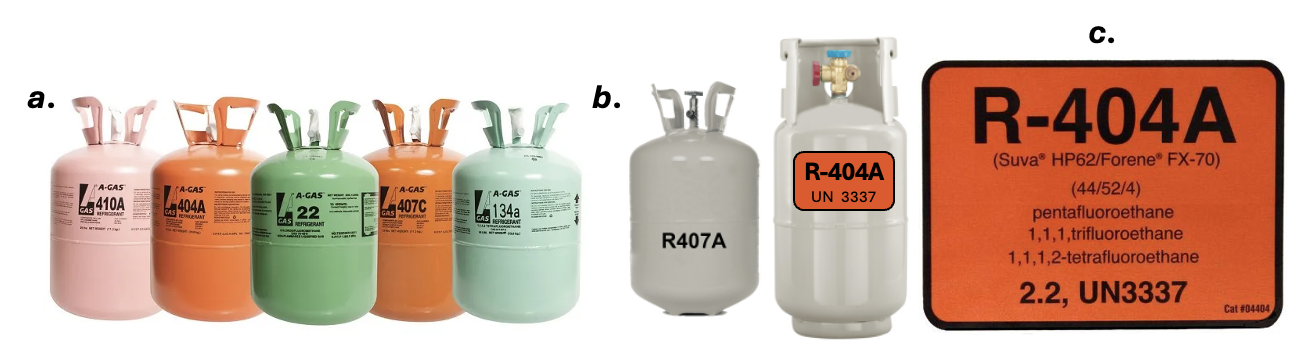
PHOTO: a. previous refrigerant gas cylinders with discontinued color coding, b. new refrigerant gas cylinders with updated color code and label, c. example of a refrigerant gas cylinder label with color coded background.
Flammable Markings
Cylinders containing a flammable refrigerant gas (according to AHRI definitions) should be me marked with a red top of red stripe.
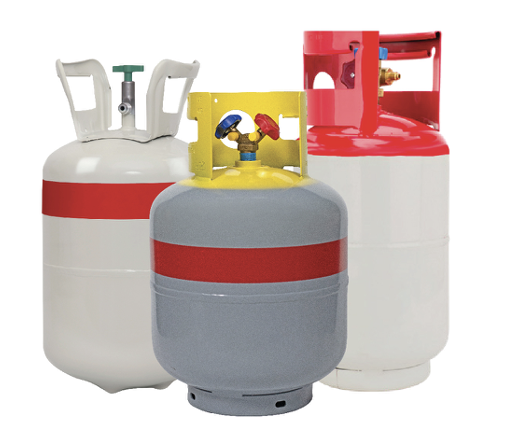
Flammable gases used as a refrigerant are not odorized.
Refrigerant Cylinder Markings
Reusable refrigerant gas cylinder markings that meet DOT specifications must be stamped with information required by DOT.
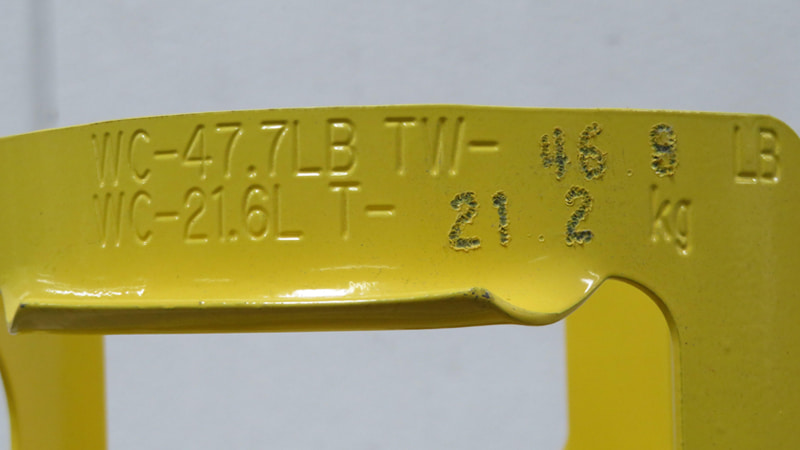
See Also Propane Cylinder Markings for more detailed information.
Refrigerant Recovery Cylinders
Recovery vessels
Warning, may be used in legal and illegal THC extraction labs
Valves and Fittings
- It features a Y-valve design for handling both liquid and vapor.
- This cylinder features a float switch that enables automatic power-off when 80% of the capacity is recovered, effectively preventing overfilling
Similar Cylinders
Helium, party containers
See also Chemical Suicides - Helium Method