
Refrigerant Gas Cylinders
Refrigerant gas cylinder overview, construction, colors and markings, valves and fittings.
Overview and Use
Refrigerant gas cylinders are used for transporting gases used cooling systems such as air conditioning systems and refrigerators to absorb and release heat.
Refrigerant gases can be flammable and/or toxic. Refrigerant gas cylinders marked with a red top or stripe contain flammable gases in accordance with industry standards, see Refrigerant Gas Cylinder Color, Label Andand Color CodesMarkings below.
Design and Construction
Refrigerant gas cylinder design and construction include disposable (single-use, DOT-39), reusable, and recovery cylinders. They vary in size from 1lb to 1,000 lbs or more.
- Disposable Cylinders: Non-refillable, DOT-compliant (DOT-39), single-use containers for adding refrigerant to systems, designed to be recycled after use to prevent refrigerant release.
- Reusable Cylinders: Multiple use cylinders that meet DOT DOT-4BA, DOT-4BW specifications or ASME certifications for larger tanks.
- Recovery Cylinders: Cylinders used to capture/receive refrigerants when they are removed from a system during system servicing/repair. They featuring specific valve systems to allow refrigerants to be added to the cylinder in the field by a pump.
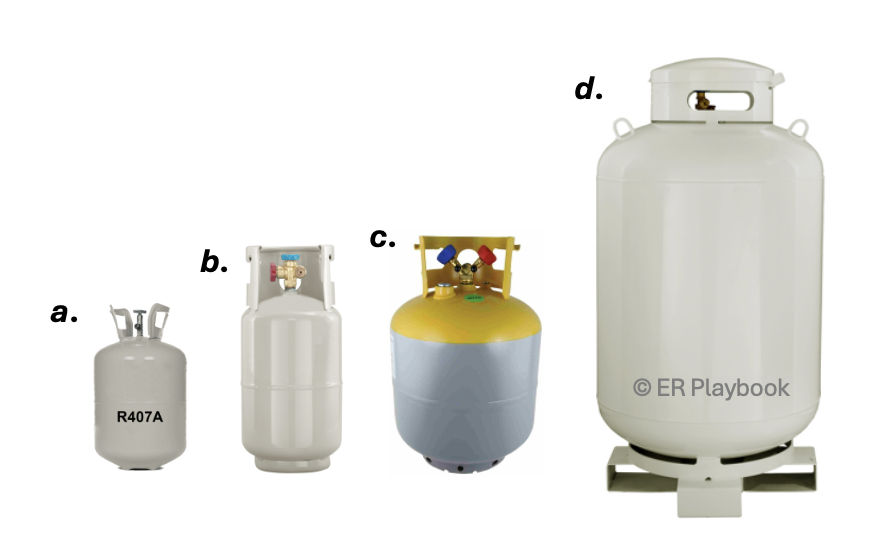
PHOTO: Refrigerant gas cylinders: a. disposable DOT spec 39, b. resusable DOT spec 4BA, c. recovery cylinder, d. Duel certified DOT cylinder and ASME tank.
Common Types of Refrigerant Gases
- Hydrofluorocarbons (HFCs): Widely used replacements for CFCs/HCFCs, like R-134a (cars, chillers) and R-410A (AC), but are being phased down due to high global warming potential (GWP).
- Hydrochlorofluorocarbons (HCFCs): Like R-22, these were transitional but are being phased out due to ozone impact.
- Chlorofluorocarbons (CFCs): Older types (e.g., R-12) phased out under the Montreal Protocol due to severe ozone depletion.
- Natural Refrigerants including:
-
- Ammonia (R-717): Used in large industrial cooling, highly efficient but toxic.
- Carbon Dioxide (R-744): Gaining popularity for its low GWP.
- Hydrocarbons: Like Propane (R-290) and Isobutane, used in smaller systems
-
See Also Refrigerant Gases for additional info on hazards and numbering system
Refrigerant Gas Cylinder Color, Label, and Markings
Color coding of refrigerant gas cylinder should comply with Air-Conditioning, Heating, and Refrigeration Institute (AHRI) Guideline N . Previously, common refrigerant gasses were each assigned a specific cylinder color. AHRI discontinued specific cylinder colors for each refrigerant cylinder, except R134a. New refrigerant gas cylinder are normally painted a standard grey. The consumer box or cylinder label may continue to use previous color for marketing purposes.
Reading the cylinder label is the primary method for identification/recognition of refrigeration cylinders.
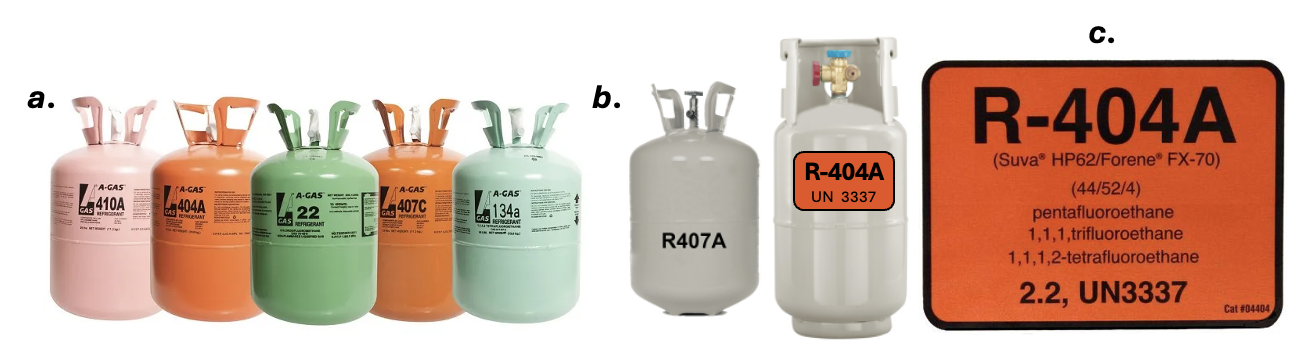
PHOTO: a. previous refrigerant gas cylinders with discontinued color coding, b. new refrigerant gas cylinders with updated color code and label, c. example of a refrigerant gas cylinder label with color coded background.
Flammable Markings
Cylinders containing a flammable refrigerant gas (according to AHRI definitions) should be me marked with a red top of red stripe.
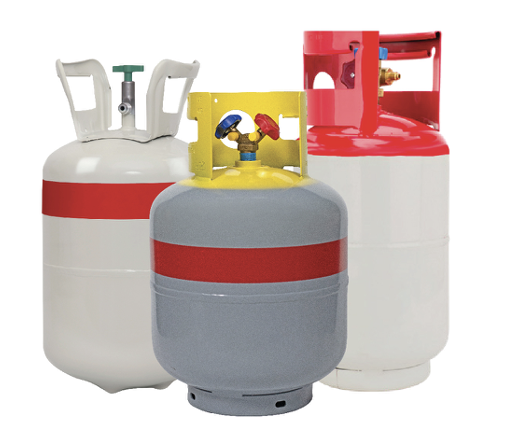
PHOTO: Refrigerant gas cylinders with a red top or red stripe to indicate a flammable refrigerant gas in accordance with AHRI definitions.
Flammable gases used as a refrigerant are not odorized.
Refrigerant Cylinder Markings
Reusable refrigerant gas cylinder markings that meet DOT specifications must be stamped with information required by DOT.
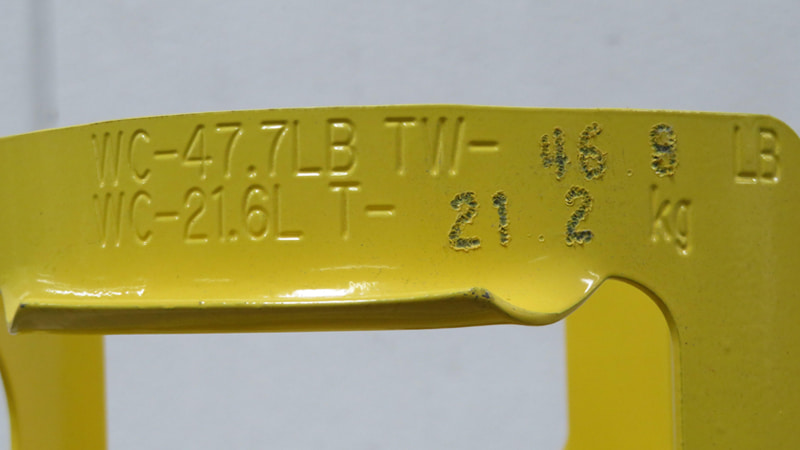
See Also Propane Cylinder Markings for more detailed information.
Refrigerant Recovery Cylinders
Refrigerant gas recovery cylinders may also be called reclaim cylinders. They are intended to for the recovery, storage, and transport of spent refrigerant gas from HVAC and refrigeration systems.
Recovery Cylinder Colors
- Yellow Top - recovery cylinder
- Yellow Top and Red stripe -recovery of flammable cylinder
- Orange Top - Commonly used for recovery of R404A. Orange is the AHRI color associated with R404A.
- Black Top - Recovery of a refrigerant gas
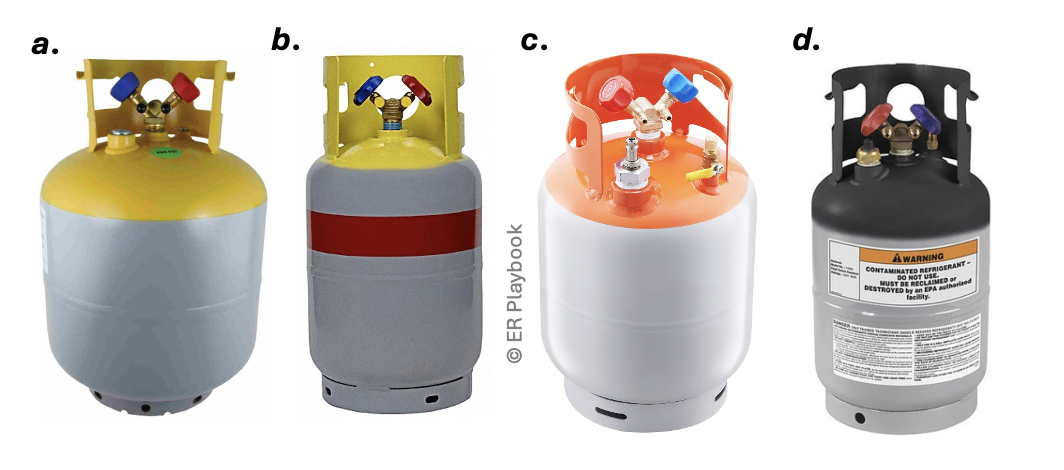
PHOTO: a. refrigerant gas recovery cylinder, b. flammable refrigerant recovery, c. recovery of R404A, d. recovery of refrigerant gas contaminated with oil.
Refrigerant gas recovery cylinders are commonly used in legal and illegal marijuana THC extraction operations to store and reclaim butane due to the gas and vapor valve set up. See also THC Extraction - Butane (BHO) Methods
Valves and Fittings
Service Valve
Refrigeration gas cylinders commonly use three types of valves
- Single port
- Dual port or Y Valve
- Single port dual valve
Single Port Valve
Single vapor service valve with one outlet/port and hand-wheel or handle that turns right to tighten and turn off.
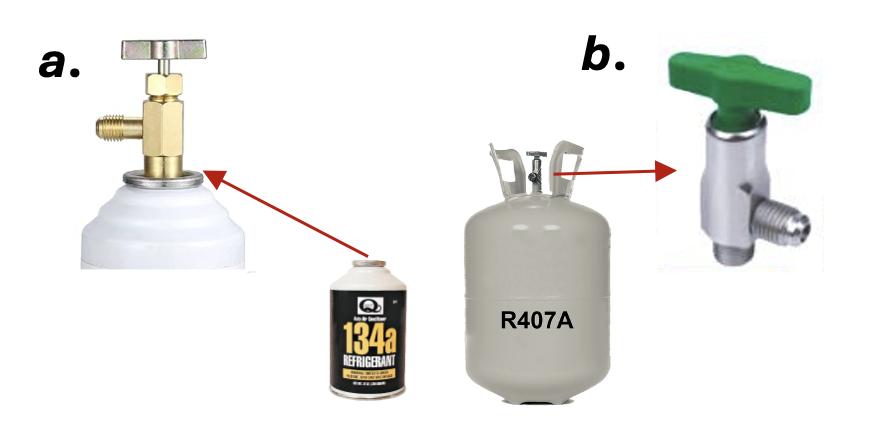
PHOTO: a. Small 12 once (134 grams) disposable cylinder (can) with a single port valve. b. Disposable cylinder with a single port valve equipped with a 1/4" SAE flare 45° threads, also know as J512.
Dual Port / Y Valve Valve
The dual port valve, also called a Y valve, has two service valves with separate outlets, each their own hand wheel. The red hand-wheel is for the liquid service connection and the blue hand-wheel is for the vapor service connection.
Single Port Dual Valve
This dual use valve has only a single outlete port to connect to, but has two hand-wheels including a red hand-wheel open access to the liquid product and a blue hand wheel to access the vapor space.
The red hand-wheel is for liquid, the blue hand-wheel is for vapor.
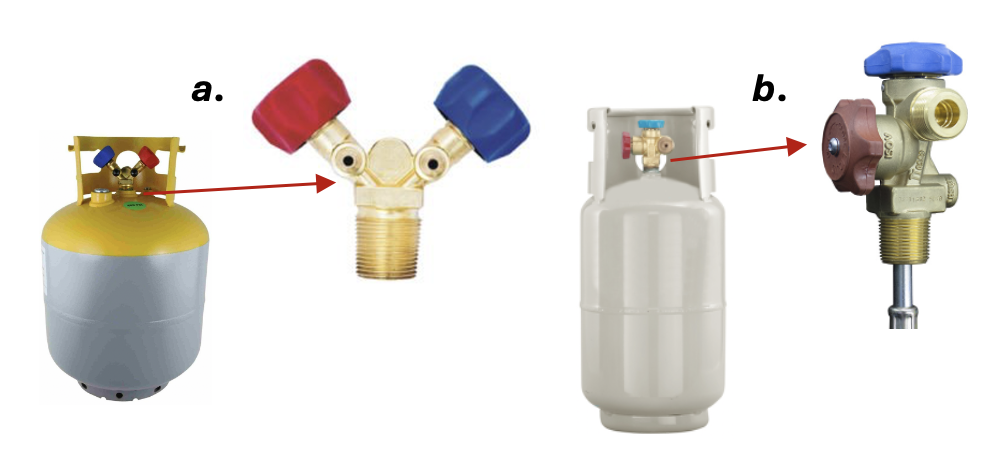
PHOTO: a. Recovery cylinder with a dual port valve b. Cylinder with a single port, dual use valve.
Valve Fittings
Most refrigeration gas cylinders valve are designed with SAE flare 45° threads, referred to as J512. They are designed forlower-pressure applications.which creates a metal-to-metal seal between the male fitting and the flared tubing or female seat.
Float Switch
A recovery vessel float sensor is a liquid level switch, often used in HVAC/refrigerant recovery tanks, that automatically detects when the tank reaches a set fill level (usually 80%) and signals the recovery equipment to shut off, preventing overfilling and ensuring safe operation, typically using a buoyant float that activates a reed switch inside the tank, connecting to the recovery machine via a cable and connector.
Similar Cylinders
DOT specification 39 disposable cylinders are used to store and transport gases other than refrigerant gases including helium, zero air, calibration gases, or welding gases.
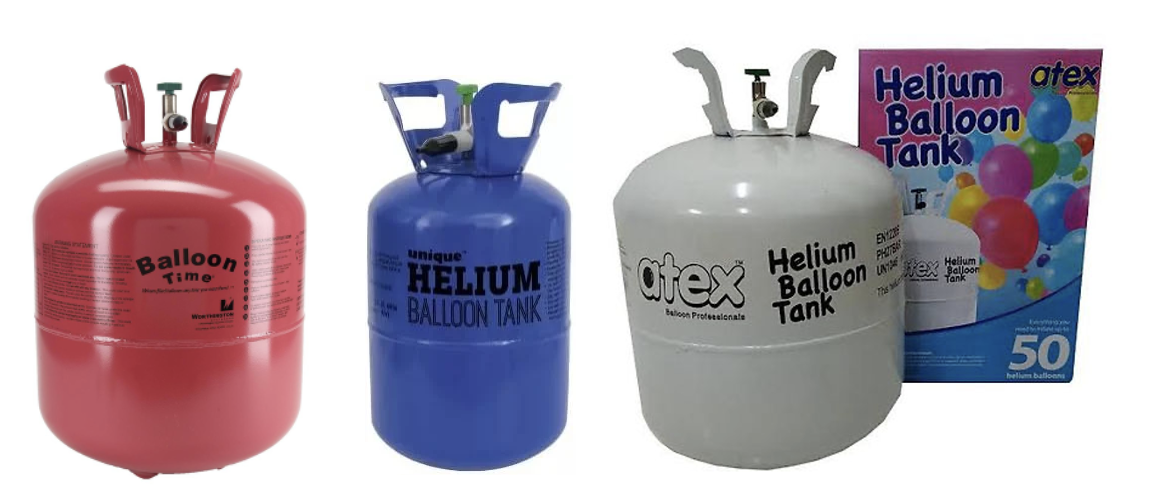
PHOTO: DOT Spec 39 disposable cylinders used for helium to inflate ballons are available in a variety of colors and may resemble refrigeration gas cylinders.
Helium cylinders may be used for as part of a chemical suicide. See Chemical Suicide - Helium Inhalation Method
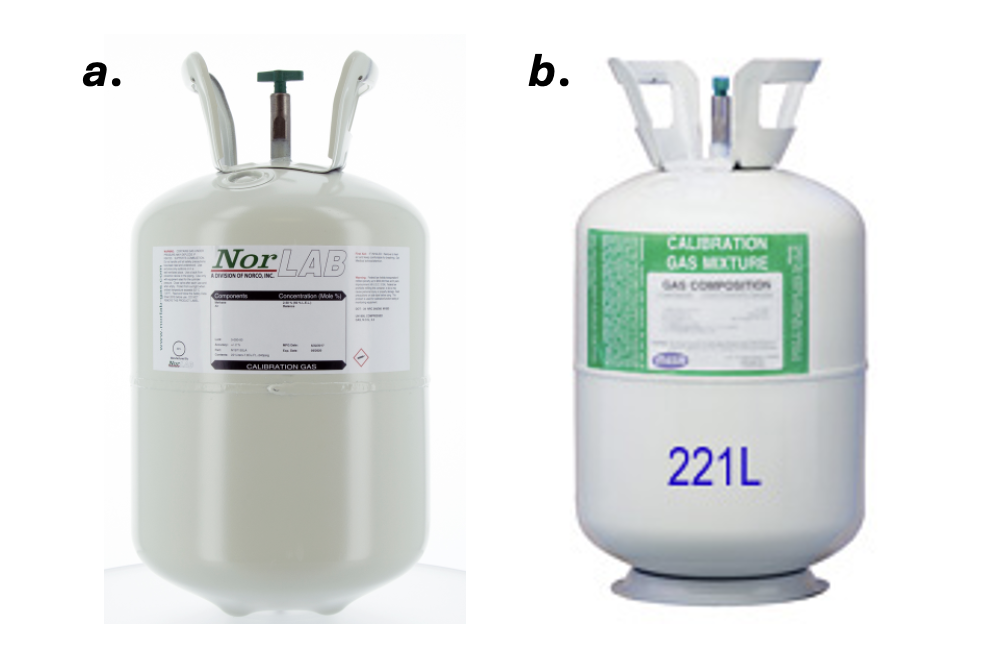
PHOTO: DOT spec 39 disposable cylinders used for other industrial/specialty gases such as a. zero air and b. calibration gas may resemble a refrigerant gas cylinder.
|
Copyright ER Playbook. Do not duplicate or share without permission. |
 |
User must verify all information is accurate and current. |