
Potassium Iodide (KI) Paper
How Potassium Iodide (KI) Paper Works
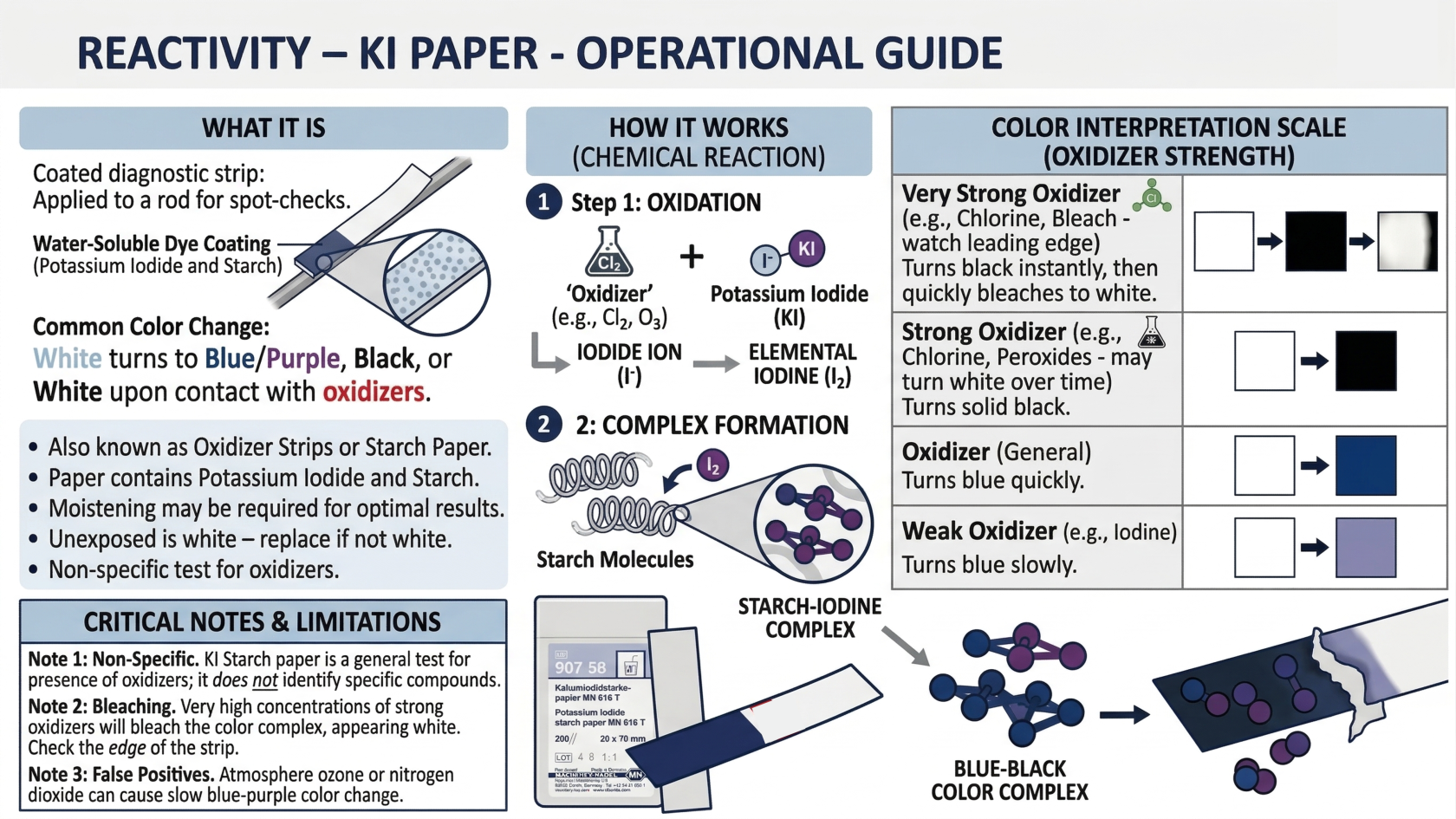
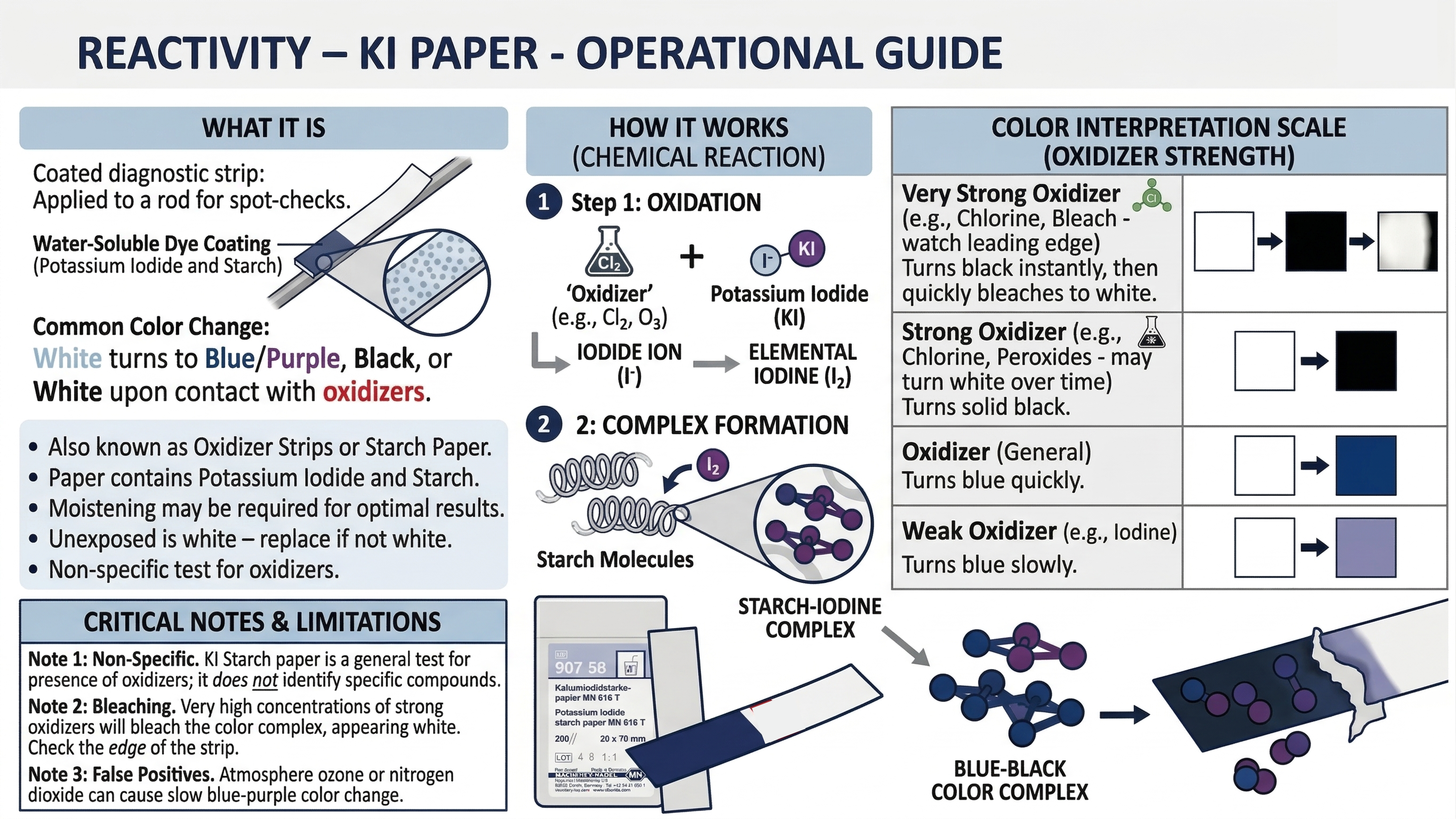
Potassium Iodide (KI) starch paper is a classic chemical indicator strip used to detect the presence of oxidizing agents (such as chlorine, fluorine, bromine, ozone, hydrogen peroxide, and nitrogen dioxide). It operates on a straightforward oxidation-reduction (redox) reaction that couples with a visual starch-iodine complex matrix.
The underlying chemical sequence follows these steps:
-
Oxidation: The test paper is pre-impregnated with potassium iodide and starch. When an oxidizing agent contacts the paper, it oxidizes the colorless iodide ions (I-) into elemental iodine (I2):
-
Complexation: The newly formed elemental iodine (I2) immediately reacts with the triiodide ions present to form a polyiodide chain, which binds inside the helical structure of the starch molecules embedded in the paper.
-
Colorimetric Shift: This starch-iodine inclusion complex alters the light absorption properties of the matrix, shifting the paper from white to a distinctive deep blue, purple, or near-black color. The intensity of the color shift provides a rough, qualitative indication of the concentration and strength of the oxidizer.
Operational Advantages
-
Immediate Threat Triage: The color change is exceptionally rapid, often occurring within 1 to 2 seconds of contact with a strong oxidizer. This gives field teams instant confirmation of an oxidizing hazard.
-
Zero Logistics or Power: It requires no batteries, warm-up times, calibration curves, or electronic maintenance. It can sit in a pocket kit indefinitely and function perfectly in extreme temperatures or high electromagnetic fields.
-
High Sensitivity to Strong Halogens: KI starch paper is incredibly sensitive to common tactical and industrial inhalation hazards like chlorine gas (Cl2) and fluorine gas (F2). It can flash dark purple at concentrations well below those immediately dangerous to life and health (IDLH).
-
Low Cost and Scalability: Because it is highly inexpensive to manufacture, massive quantities of test strips can be deployed across a large team or used as a disposable "first-look" tool to screen unknown containers before bringing out expensive electronic instrumentation.
Operational Limitations
-
Severe Lack of Specificity: KI paper is a generic hazard-class indicator. It tells you that an oxidizing material is present, but it cannot identify the specific chemical. It will turn the exact same shade of purple whether it is hit by hazardous industrial chlorine gas, ozone from a lightning strike, or consumer-grade hydrogen peroxide.
-
False Negatives from Weak Oxidizers or Acidity: While highly responsive to strong oxidizers, weaker oxidizing agents may fail to convert the iodide ions fast enough to trigger a distinct color change in the field, leading to a false sense of security.
-
The "Bleaching" Effect: If the paper is exposed to an extremely high concentration of a strong oxidizer (such as concentrated liquid bleach or pure chlorine gas), the chemical can over-oxidize and permanently destroy the starch matrix or bleach the iodine molecules. When this happens, the paper may flash purple for a microsecond and then turn completely white, which an untrained responder might mistake for a negative result.
-
Moisture Dependency: For gas-phase detection, the paper must be slightly dampened with distilled water prior to exposure. The water acts as a solvent medium that allows gaseous molecules to dissolve and react with the potassium iodide ions. If the paper is bone dry, its sensitivity to vapors drops drastically.
-
Non-Quantifiable Data: KI paper provides purely qualitative (Yes/No) data. It cannot tell a responder the exact parts-per-million (ppm) concentration of a gas or verify if an atmosphere has dropped below regulatory exposure limits.